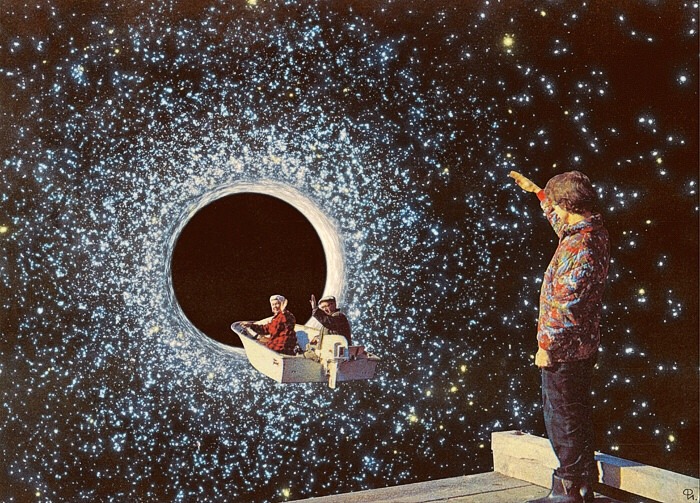
To the stars beyond the blue, there’s a Never Land waiting for you
#leavingneverland #michaeljackson pic.twitter.com/0Xq1t97pgx
— kyle Dunnigan (@kyledunnigan) March 6, 2019
#leavingneverland #michaeljackson pic.twitter.com/0Xq1t97pgx
— kyle Dunnigan (@kyledunnigan) March 6, 2019

Hot temperatures do not have a significant effect on sexual activity on a given day. […] we found that temperature does not influence sexual activity on subsequent days either. […]
the relationship between temperature and sexual activity might be a mechanism of minor importance in the relationship between temperature and birth rates.

AI-generated videos that show a person’s face on another’s body are called “deepfakes.” […]
Airbrushing and Photoshop long ago opened photos to easy manipulation. Now, videos are becoming just as vulnerable to fakes that look deceptively real. Supercharged by powerful and widely available artificial-intelligence software developed by Google, these lifelike “deepfake” videos have quickly multiplied across the Internet, blurring the line between truth and lie. […] A growing number of deepfakes target women far from the public eye, with anonymous users on deepfakes discussion boards and private chats calling them co-workers, classmates and friends. Several users who make videos by request said there’s even a going rate: about $20 per fake. […]
Deepfake creators often compile vast bundles of facial images, called “facesets,” and sex-scene videos of women they call “donor bodies.” Some creators use software to automatically extract a woman’s face from her videos and social-media posts. Others have experimented with voice-cloning software to generate potentially convincing audio. […]
The requester of the video with the woman’s face atop the body with the pink off-the-shoulder top had included 491 photos of her face, many taken from her Facebook account. […] One creator on the discussion board 8chan made an explicit four-minute deepfake featuring the face of a young German blogger who posts videos about makeup; thousands of images of her face had been extracted from a hair tutorial she had recorded in 2014. […]
The victims of deepfakes have few tools to fight back. Legal experts say deepfakes are often too untraceable to investigate and exist in a legal gray area: Built on public photos, they are effectively new creations, meaning they could be protected as free speech. […]
Many of the deepfake tools, built on Google’s artificial-intelligence library, are publicly available and free to use. […] Google representatives said the company takes its ethical responsibility seriously, but that restrictions on its AI tools could end up limiting developers pushing the technology in a positive way. […]
“If a biologist said, ‘Here’s a really cool virus; let’s see what happens when the public gets their hands on it,’ that would not be acceptable. And yet it’s what Silicon Valley does all the time,” he said.
{ Washington Post | Continue reading }
Technical experts and online trackers say they are developing tools that could automatically spot these “deepfakes” by using the software’s skills against it, deploying image-recognition algorithms that could help detect the ways their imagery bends belief.
The Defense Advanced Research Projects Agency, the Pentagon’s high-tech research arm known as DARPA, is funding researchers with hopes of designing an automated system that could identify the kinds of fakes that could be used in propaganda campaigns or political blackmail. Military officials have advertised the contracts — code-named “MediFor,” for “media forensics” — by saying they want “to level the digital imagery playing field, which currently favors the manipulator.”
The photo-verification start-up Truepic checks for manipulations in videos and saves the originals into a digital vault so other viewers — insurance agencies, online shoppers, anti-fraud investigators — can confirm for themselves. […]
However, the rise of fake-spotting has spurred a technical blitz of detection, pursuit and escape, in which digital con artists work to refine and craft evermore deceptive fakes. In some recent pornographic deepfakes, the altered faces appear to blink naturally — a sign that creators have already conquered one of the telltale indicators of early fakes, in which the actors never closed their eyes. […] “The counterattacks have just gotten worse over time, and deepfakes are the accumulation of that,” McGregor said. “It will probably forever be a cat-and-mouse game.”
I was a camgirl for five years. My highest earning month was $50,000. […] The ceiling on cam income is very high — top-range models make around $200/hr, and the super-high end ones can make $1000+/hr. The average income is roughly $40/hr, based on around 200 girls I surveyed a few years ago. […]
Nearly every camgirl I’ve seen has used logitech webcams.
{ Knowingless | Continue reading }
Chaturbate takes forty to fifty percent depending on the amount of tokens purchased by users (see below), and pays the rest to the broadcaster, leaving the broadcaster with exactly $5 per one hundred tokens.
{ Cam Model Plaza | Continue reading }
previously { How camgirls are making thousands of dollars on Snapchat }
still { Ingmar Bergman, Summer with Monika, 1953 }

Previous studies have shown that male attractiveness can be enhanced by manipulation of status through, for example, the medium of costume. The present study experimentally manipulated status by seating the same target model (male and female matched for attractiveness) expressing identical facial expressions and posture in either a ‘high status’ (Silver Bentley Continental GT) or a ‘neutral status’ (Red Ford Fiesta ST) motor-car. […]
Results showed that the male target model was rated as significantly more attractive on a rating scale of 1–10 when presented to female participants in the high compared to the neutral status context. Males were not influenced by status manipulation, as there was no significant difference between attractiveness ratings for the female seated in the high compared to the neutral condition.
unrelated { Sweden plans to make sex toys safer because so many people get them stuck in their rectum }

50.43% of women considered it very important that the partner ejaculates during intercourse.
18.3% of women preferred that the partner ejaculates before they reach orgasm, whereas for 53.5% this did not matter.
22.6% of women stated that they experienced a more intense orgasm when their partner ejaculated during vaginal intercourse. […]
13.1% of women regarded the quantity of expelled ejaculate as an expression of their own sexual attractiveness.
In April 2018, the servers of the popular video game “Fortnite” crashed for 24 hr. During this period, Pornhub (a popular pornographic website) analyzed trends in pornography access, finding that: (a) the percentage of gamers accessing Pornhub increased by 10% and (b) the searches of pornographic videos using the key term “Fortnite” increased by 60%.
related { How Fortnite became the most important video game on the planet }
update { Online divorce service says ‘Fortnite addiction’ cited in 200 divorces }
pochoir, brush and india ink { Roy Lichtenstein, Hand Loading Gun, 1961 }
We investigated the association between sexy-selfie prevalence and income inequality. […] Among 5,567 US cities and 1,622 US counties, areas with relatively more sexy selfies were more economically unequal. […] We investigated and confirmed that economically unequal (but not gender-oppressive) areas in the United States also had greater aggregate sales in goods and services related to female physical appearance enhancement (beauty salons and women’s clothing).
{ Proceedings of the National Academy of Sciences | Continue reading }
“Selfies” (self-taken photos) are a common self-presentation strategy on social media. This study experimentally tested whether taking and posting selfies, with and without photo-retouching, elicits changes to mood and body image among young women. […] Women who took and posted selfies to social media reported feeling more anxious, less confident, and less physically attractive afterwards compared to those in the control group. Harmful effects of selfies were found even when participants could retake and retouch their selfies.
{ Body Image | Continue reading }
When young children during their early development for the first time get their head around the fact that the reflection in the mirror is them, they are struck with a terrifying realization: All at once it dawns on them that this is how they present themselves to the world – and that the world might be repulsed by the sight. Animals, it seems, are not able to make that discovery. […] Hearing a recording of one’s own voice for the first time produces a similarly uncanny sensation.

This paper examines the association between television ownership and coital frequency using data from nearly 4 million individuals in national household surveys in 80 countries from 5 continents. […]
Under our most conservative estimate, we find that television ownership is associated with approximately a 6% reduction in the likelihood of having had sex in the past week,
photo { Matthew Casteel }

The familiarity of the phrase ‘much ado about nothing’ belies its complexity. In Shakespeare’s day ‘nothing’ was pronounced the same as ‘noting’, and the play contains numerous punning references to ‘noting’, both in the sense of observation and in the sense of ‘notes’ or messages. […]
‘Nothing’ was Elizabethan slang for the vagina (a vacancy, ‘no-thing’ or ‘O thing’). Virginity — a state of potentiality rather than actuality — is also much discussed in the play, and it is these twin absences — the vagina and virginity — that lead, in plot terms, to the ‘much ado’ of the title.

This study utilized a sample population of married individuals specifically seeking extramarital sexual encounters (n = 1070) and investigated those factors which influence the individual’s overall perception of life satisfaction before, during, and after their affairs. Findings indicate that while affairs do tend to make respondents happy, a number of factors influence perception of life satisfaction during an affair, including a belief that an outside partner is required to remain in a primary partnership, a desire to remain in the primary partnership, at least biweekly sexual events with the outside partner, a belief that the individual loves their outside partner, and seeking out the partnership due to sexual dissatisfaction within the primary partnership. There was also a gender effect. A surprising finding was that even after the outside partnership ends, respondents reported a higher life satisfaction rating than before the outside partnership.
{ Sexuality & Culture | Continue reading }
Postcoital Dysphoria (PCD) is a counter-intuitive phenomenon characterized by inexplicable feelings of tearfulness, sadness, or irritability following otherwise satisfactory consensual sexual activity. Prevalence of PCD has been reported among females, but not among males. […]
The present study utilized an anonymous online questionnaire to examine the prevalence and correlates of PCD amongst an international sample including 1,208 male participants. Forty one percent reported experiencing PCD in their lifetime and 20% reported experiencing PCD in the previous four weeks. Between 3-4% of the sample reported experiencing PCD on a regular basis.
{ Journal of Sex & Marital Therapy | Continue reading }
The association between alcohol intake and male reproductive function is still controversial. […] we performed a cross‐sectional analysis of semen quality. […]
Moderate alcohol intake appears positively associated to semen quality in male partners of infertile couples undergoing assisted reproductive techniques.
Women differ greatly from one another in terms of their tendency and capacity to experience orgasms. The improvements in gender equality and sexual education since the 1970s have not helped women to become more orgasmic. Neither has the major increase in masturbation habits (among women in general).
One challenge for future studies is to understand why women value their partner’s orgasms more than their own.
{ Socioaffective Neuroscience & Psychology | Continue reading }
related { A majority of women experienced a more intense orgasm given intravaginal ejaculation + Female ejaculation has a positive impact on women’s and their partners’ sexual lives }
Long-term relationships and especially marriage have long got a bad rap in terms of the erotic. The German poet Gottfried Benn, for example, stated: “Marriage is an institution for the paralysis of the sexual instinct” Even women like the American author Erica Jong join in the lament. “Even if you loved your husband, there came that inevitable year when fucking him turned as bland as Velveeta cheese: filling, fattening even, but no thrill to the taste buds, no bittersweet edge, no danger.” That such remarks are not far-fetched, psychologist Kirsten von Sydow from the University of Hamburg has verified with a comprehensive literature review. […]
This loss of libido in marriage is also called the “Coolidge effect”. Among cattle breeders, it is known as the bull’s reluctance to mount the same cow repeatedly, with the libido returning after the encounter with a new cow. The name Coolidge refers to the 30 U.S. President Calvin Coolidge (1872-1933). According to a famous anecdote, Mr. Coolidge once visited a farm with his wife where Mrs. Coolidge became aware of a cock who just mounted a hen. When they told her that the cock accomplished this feat up to twelve times a day, she replied: “Tell that to my husband!” When the president learned of the miracles, he asked: “Always with the same hen?” When he was assured that it was another one every time, he replied: “Tell that to my wife!” […]
The Coolidge effect can be expressed in numerical values, says von Sydow. “In the first year of living together, the weekly coital activity of three times drops to just under twice, then it further diminishes over two to three years.” […] For gay and lesbian couples, the decline in coital frequency is at least as strong. And this is not a question of age, because after a divorce and with a new partner, the sex drive is easily rekindled. […]
“Men love the idea of getting between the blankets with a woman just for fun, including with a woman with whom they do not want to have a long-term relationship,” Baumeister points out. “From the standpoint of these men, sex affords pleasure, and sex with new partners affords a particularly great pleasure. Why shouldn’t they have it off other with those women without tying up? Unfortunately for these men, most women do not share that view. ”

We explored the effect of revealing or conservative attire on perceptions of women’s leadership competence. We also used eye-tracker technology to determine whether looking at sexualized body parts (i.e., breasts, hemline) was related to lower perceptions of leadership competence and electability.
A female candidate for a student senate presidency at a U.S. university wearing revealing clothing was perceived by 191 college students as less honest and trustworthy, electable, and competent than one wearing conservative clothing. Sexualized body parts were looked at longer when the candidate was wearing revealing clothing compared to conservative clothing. Furthermore, mediation analyses indicated that the revealing clothing led participants to gaze at sexualized body parts, which, in turn, led to perceiving the candidate as less honest/trustworthy, which lowered their evaluations of her competence and electability.
These findings suggest that viewing a woman in a sexy outfit can lead others to stare more at her body and make negative evaluations of her personal attributes.
art { Corinne Dodenhoff }

Why the Victorian era saw a surge in female births and war begets boys
There is empirical evidence that heavy sexual activity increases the chances that conception will occur before the most fertile time of the female cycle, as the woman may be pregnant by then. And the data also suggest that, possibly for hormonal reasons, such conceptions are slightly more likely to be boys. “It doesn’t take much imagination to suppose that the ends of wars, with servicemen home on leave or returning home, are associated with fairly intense sex – more babies were born in the UK in 1919 than any other year in history. Put all these together and you get the conclusion – frantic fornication breeds boys.”
[…]
Which brings us back to the mysterious surge of female births in the late Victorian period. Could it be that, in the same vein in which heavy sexual activity increases the sex ratio, a trend towards sexual inactivity lowers it? “Victorian morality” distinguished itself through a set of values that espoused sexual restraint, with an increased condemnation of masturbation and sexual activity in general, repressing any form of sexuality other than penetrative intercourse. And indeed, statistics reflect a steady decline of sexual activity throughout the Victorian period, reaching its lowest point in the year 1898. But as there was less sex going on, conception tended to occur around the most fertile time of the months, bestowing a (relative) excess of baby girls on the Victorians.
{ Rolf Degen | Continue reading }
Hypothesis 1
Up to circa two decades age, it was generally supposed – but without hard supporting evidence – that pregnant women exposed to adverse environmental circumstances were at increased risk of foetal loss, and that male foetuses were at greater risk than female foetuses; and that therefore the liveborn infants produced by stressed women contained a higher proportion of daughters. That hard evidence has now been accumulated in a series of papers by Catalano and colleagues, and others.
Using time-series analysis, it has been shown that the Sex ratios at birth (SRB) briefly declined, slightly but significantly, some three to five months after many catastrophic and other adverse events e.g. the terrorist attacks on September 11th, 2001; the Troubles in Northern Ireland (1969–1998), the Breivik shooting in 2011 in Norway, the Sandy Hook shooting in 2012 in Connecticut; the assassination of President Kennedy [though the effect in this case was more marked in non-White than White births]. […]
Thus there is overwhelming evidence that sex ratios at birth are partially controlled by maternal stress-induced selective culling of frail males in utero, resulting in a conception cohort with a low sex ratio at birth. It has also been postulated that the ratio may be skewed because of fertilization of non-optimally matured oocytes under these circumstances. Moreover, it has also been hypothesized that higher coital rates will lead to ejaculation of newly formed spermatozoa cells, possibly leading to a preponderance of Y-sperm since it is also hypothesized that X-sperm age faster and are eliminated earlier.
However, it will be appreciated that selective culling of frail males during pregnancy cannot explain some of the established variations of SRB. First, it cannot explain why some reported sex ratios are higher than prevailing norms. Second, it cannot explain why these norms almost always exceed 0.5 (equal numbers of males and females).
Hypothesis 2
It has been hypothesized that human sex ratios at birth are partially controlled by the parental hormone levels of both parents around the time of conception. Ex hypothesi, high levels of testosterone (in either parent) and/or of oestrogen (in the mother), are associated with subsequent male births. And high levels of gonadotrophins (in either parent) are associated with subsequent female births. Most of this evidence is observational and correlational, and is in accordance with the hypothesis of Trivers & Willard.
lithograph { Ellsworth Kelly, Small Blue Curve, 2013 }

Of all the criticisms aimed at fracking, charges that it might increase the incidence of STDs – specifically gonorrhea – are seldom heard.
Yet there might be a link – according to a new research paper published in the Journal of Public Health Policy. […]
We find that fracking activity is associated with a 20 per cent increase in gonorrhea.
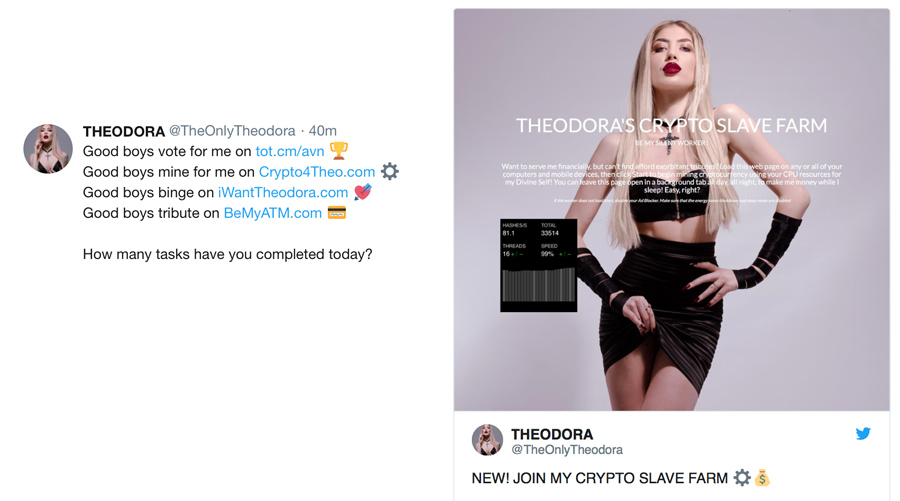
The woman, who calls herself Theodora, is a financial dominatrix, which means clients — many of whom never meet her in person — derive sexual pleasure from giving her gifts and money. Exchanges of money can range from several dollars in “tributes,” as they are called, to gifts of more than six figures. Some clients even become a “human ATM,” meaning they give her complete control over a bank account. […] Last year she made over $1 million in cryptocurrency alone.

While pornography is not the only medium in which orgasm is portrayed, it is the most explicit, and it is widespread and easily accessible. As such, pornography is an ideal medium for examining representations of male and female orgasm. […] Only 18.3% of women, compared to 78.0% of men, were shown reaching orgasm.

Heterosexual men were most likely to say they usually-always orgasmed when sexually intimate (95%), followed by gay men (89%), bisexual men (88%), lesbian women (86%), bisexual women (66%), and heterosexual women (65%).
Compared to women who orgasmed less frequently, women who orgasmed more frequently were more likely to: receive more oral sex, have longer duration of last sex, be more satisfied with their relationship, ask for what they want in bed, praise their partner for something they did in bed, call/email to tease about doing something sexual, wear sexy lingerie, try new sexual positions, anal stimulation, act out fantasies, incorporate sexy talk, and express love during sex.
Women were more likely to orgasm if their last sexual encounter included deep kissing, manual genital stimulation, and/or oral sex in addition to vaginal intercourse.
pocelain, china paint and luster { Jessica Stoller, Untitled (frosted bust), 2012 }

As men are generally more short-term oriented in their sexuality than women, and given that cigarette and alcohol use are still considered masculine behaviors, we explored if female smoking and drinking can function as a short-term mating strategy. […]
The experiment showed that young men perceive women who use cigarettes and alcohol as being more sexually unrestricted. Furthermore, tobacco and (especially) alcohol use brought some short-term attractiveness benefits to women. In short-term mating contexts, drinking enhanced women’s attractiveness, whereas occasional smoking was found equally desirable as not smoking. However, in long-term mating contexts, frequent drinking and all smoking behavior harmed women’s desirability.