mystery

M.C. Busy Le Disco fooled around in Fresno

81.jpg

On August 31, 2012, Japanese mathematician Shinichi Mochizuki posted four papers on the Internet.

The titles were inscrutable. The volume was daunting: 512 pages in total. The claim was audacious: he said he had proved the ABC Conjecture, a famed, beguilingly simple number theory problem that had stumped mathematicians for decades. […]

The problem, as many mathematicians were discovering when they flocked to Mochizuki’s website, was that the proof was impossible to read. The first paper, entitled “Inter-universal Teichmuller Theory I: Construction of Hodge Theaters,” starts out by stating that the goal is “to establish an arithmetic version of Teichmuller theory for number fields equipped with an elliptic curve…by applying the theory of semi-graphs of anabelioids, Frobenioids, the etale theta function, and log-shells.”

This is not just gibberish to the average layman. It was gibberish to the math community as well.

{ Caroline Chen/Project Wordsworth | Continue reading }

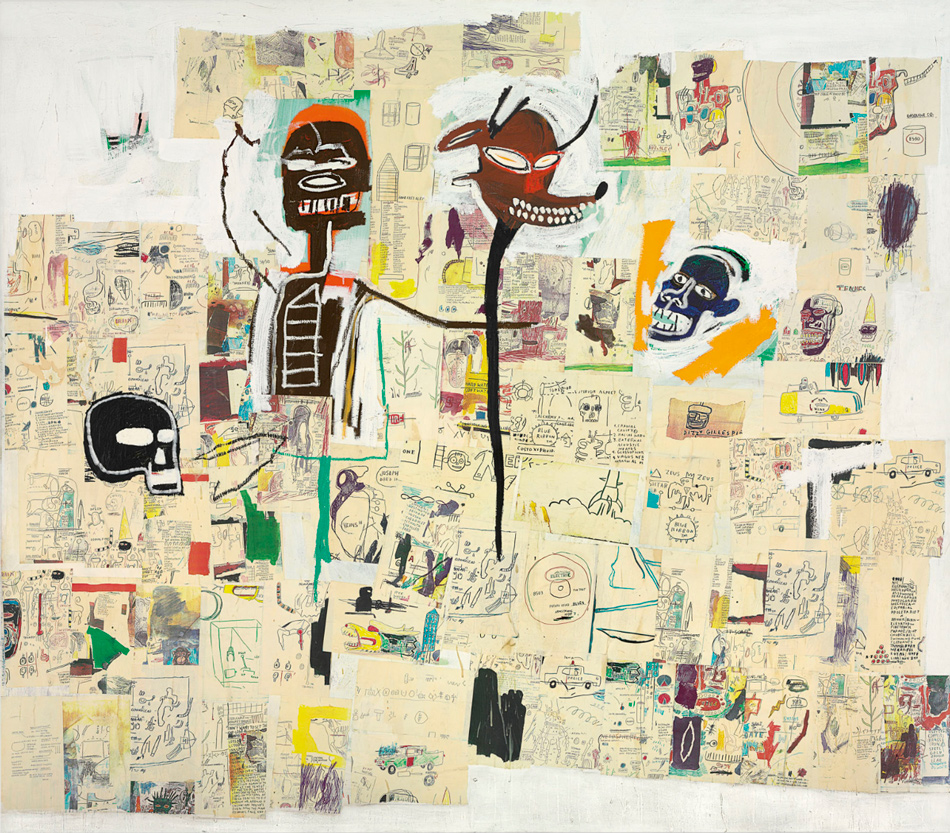
art { Cy Twombly, Coronation of Sesostris, 2000 }

Panther power on the hour from the rebel to you

43.jpg

As life has evolved, its complexity has increased exponentially, just like Moore’s law. Now geneticists have extrapolated this trend backwards and found that by this measure, life is older than the Earth itself.

{ The Physics arXiv Blog | Continue reading }

What part of NO don’t you understand?

4531.jpg

For over two decades researchers have shown that there are unexpected consequences when an individual actively tries to avoid certain thoughts. First, you will start thinking about the thought you are trying to avoid more. Second, if the thought is about a behavior, you increase the likelihood of engaging in that behavior. In short, avoidance makes you less able to control what you think and what you do. Further research is necessary to explore why thought avoidance is such a prolific self-control strategy when all available evidence points to its counterintuitive consequences. […]

Thought suppression commonly refers to the act of deliberately trying to rid the mind of unwanted thoughts. In early investigations researchers demonstrated that the suppression of a particular thought often resulted in the subsequent increased return of the unwanted thought, a phenomenon termed the ‘rebound effect.’ This basic effect has been replicated on many occasions, and a more recent meta-analysis suggests the rebound effect is robust.

Therefore, there is currently a general acceptance of the view that thought suppression does not work as a strategy for controlling one’s mind, and if anything makes one more susceptible to unwanted intrusive thoughts. For example, after watching a disturbing news item, I may attempt to suppress thoughts about this disturbing footage. However, the likely outcome of this will be that I will think about the footage more not less, and I may even begin to feel obsessed. […]

Studies have reported that thought suppression can have behavioral consequences. […] How many times have you carried a tray of food or drink thinking whatever happens I must not spill this, only to then redecorate the living room with it? These errors seem to plague us and chastise us all the more so because we knew exactly what we shouldn’t have done ahead of time. Thereby, it seems that the act of trying not to, or suppressing invites one to do exactly the opposite. […]

One must avoid using thought suppression in instances where one is attempting to control a behavior. This is especially pertinent when attempting to control behaviors such as smoking, excessive alcohol or food intake, as these are likely areas where thought suppression will feature as a control strategy.

{ The Psychologist | Continue reading }

That dreamers often lie

455.jpg

A massive effort to uncover genes involved in depression has largely failed. By combing through the DNA of 34,549 volunteers, an international team of 86 scientists hoped to uncover genetic influences that affect a person’s vulnerability to depression. But the analysis turned up nothing.

The results are the latest in a string of large studies that have failed to pinpoint genetic culprits of depression. […] Depression seems to run in families, leading scientists to think that certain genes are partially behind the disorder. But so far, studies on people diagnosed with depression have failed to reveal these genes.

{ ScienceNews | Continue reading }

Look like you’re listening

231.jpg

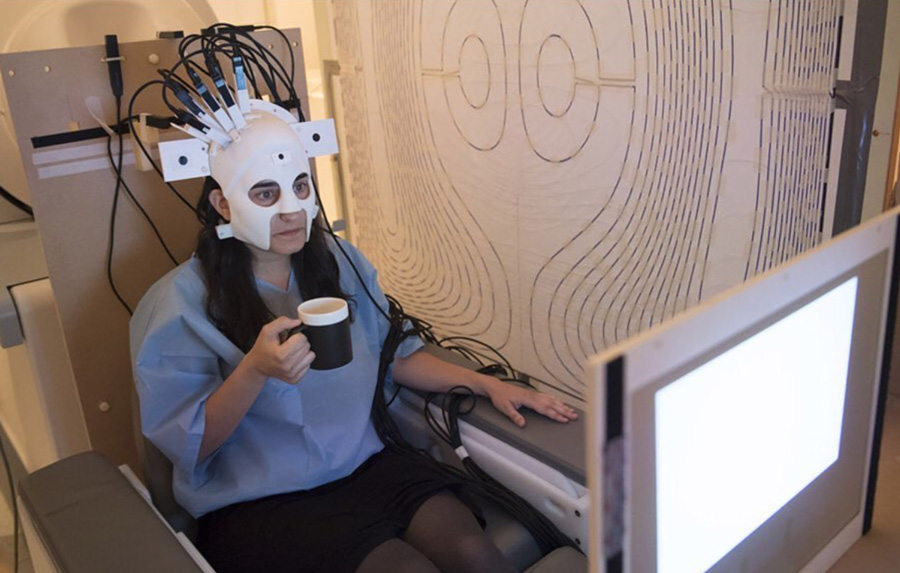
People are often broken into two groups when doing hypnosis research. High hypnotizable people and non-hypnozable people. As most people have heard, hypnosis does not work on everybody. But why is that? Research shows that high hypnotizable people actually have structural differences in their brains.

{ Quora | Continue reading }

Till her eyes were green stones

314.jpg

Researchers have found that placebo treatments—interventions with no active drug ingredients—can stimulate real physiological responses, from changes in heart rate and blood pressure to chemical activity in the brain, in cases involving pain, depression, anxiety, fatigue, and even some symptoms of Parkinson’s.

The challenge now, says Kaptchuk, is to uncover the mechanisms behind these physiological responses—what is happening in our bodies, in our brains, in the method of placebo delivery (pill or needle, for example), even in the room where placebo treatments are administered (are the physical surroundings calming? is the doctor caring or curt?). The placebo effect is actually many effects woven together—some stronger than others—and that’s what Kaptchuk hopes his “pill versus needle” study shows. The experiment, among the first to tease apart the components of placebo response, shows that the methods of placebo administration are as important as the administration itself, he explains. It’s valuable insight for any caregiver: patients’ perceptions matter, and the ways physicians frame perceptions can have significant effects on their patients’ health. […]

What if he simply told people they were taking placebos? The question ultimately inspired a pilot study, published by the peer-reviewed science and medicine journal PLOS ONE in 2010, that yielded his most famous findings to date. His team again compared two groups of IBS sufferers. One group received no treatment. The other patients were told they’d be taking fake, inert drugs (delivered in bottles labeled “placebo pills”) and told also that placebos often have healing effects.

The study’s results shocked the investigators themselves: even patients who knew they were taking placebos described real improvement, reporting twice as much symptom relief as the no-treatment group. That’s a difference so significant, says Kaptchuk, it’s comparable to the improvement seen in trials for the best real IBS drugs.

{ Harvard Magazine | Continue reading }

photo { Erwin Blumenfeld, Nude Light,Shadow, New York, 1952 }

Hell of a racket they make. Maybe he understands what I.

32.jpg

Since its introduction in 1846, anesthesia has allowed for medical miracles. Limbs can be removed, tumors examined, organs replaced—and a patient will feel and remember nothing. Or so we choose to believe. In reality, tens of thousands of patients each year in the United States alone wake up at some point during surgery. Since their eyes are taped shut and their bodies are usually paralyzed, they cannot alert anyone to their condition. In efforts to eradicate this phenomenon, medicine has been forced to confront how little we really know about anesthesia’s effects on the brain. The doctor who may be closest to a solution may also answer a question that has confounded centuries’ worth of scientists and philosophers: What does it mean to be conscious?

{ The Atlantic | Continue reading }

The chord in any circle being less than the arc which it subtends

65.jpg

{ Why is the polyp Hydra immortal? Researchers from Kiel University decided to study it — and unexpectedly discovered a link to aging in humans. | Kurzweil | full story }

‘The only thing good about this shithole is their screening of Night of the Hunter. Everything else can burn.’ –James Tung

61.jpg

In the 1990s, Thomas Quick confessed to more than 30 murders, making him Sweden’s most notorious serial killer. Then, he changed his name and revealed his confessions were all faked. […]

There were no DNA traces, no murder weapons, no eyewitnesses – nothing apart from his confessions, many of which had been given when he was under the influence of narcotic-strength drugs.

{ Guardian | full story }

image { Marina Abramović, Rhythm 10, 1973 }

On October 4, good luck planet Jupiter goes retrograde (backward) in Gemini, your house of personal goals and new beginnings

316.jpg

Sawing a woman in half is a generic name for a number of stage magic tricks in which a person (traditionally a female assistant) is apparently sawn or divided into two or more pieces. […]

Magician Les Arnold is reported to have been the first to have devised a clear box sawing (known as the “Crystal Sawing”) as far back as 1976. The Pendragons performed a variation called “Clearly Impossible”, in which the box used is both particularly slim and also transparent. […]

As a teenager Dorothy Dietrich became “distinguished as the first woman to saw a man in half” [she is also the first and only woman to have performed the bullet catch in her mouth].

{ Wikipedia | Continue reading }

images { Jennifer Grey in Dirty Dancing, 1987 | Irving Penn, Chieftain’s Wife (Torso), Cameroon, 1969 }

‘The possible ranks higher than the actual.’ –Heidegger

36.jpg

In 1922, Scientific American made two US$2,500 offers: (1), for the first authentic spirit photograph made under test conditions, and (2), for the first psychic to produce a “visible psychic manifestation.” […]

Since then, many individuals and groups have offered similar monetary awards for proof of the paranormal in an observed setting. These prizes have a combined value of over $1.69 million dollars.

As of August 2012, none of the prizes has been claimed.

{ Wikipedia | Continue reading }

A queer kind of medium, the mind

211.jpg

When we’re making a snap judgement about a fact, the mere presence of an accompanying photograph makes us more likely to think it’s true, even when the photo doesn’t provide any evidence one way or the other. In the words of Eryn Newman and her colleagues, uninformative photographs “inflate truthiness.” […]

The researchers can’t be sure: “We speculate that nonprobative photos and verbal information help people generate pseudo evidence,” they said.

{ BPS | Continue reading }

photo { 16 year old Jerry Hall on a road trip, photographed by Antonio Lopez }