‘Truth is, everybody is going to hurt you; you just gotta find the ones worth suffering for.’ –Bob Marley

Findings suggest that, at least at the level of the male hormone, marriage doesn’t matter.
Findings suggest that, at least at the level of the male hormone, marriage doesn’t matter.

At some point, the Mongol military leader Kublai Khan (1215–1294) realized that his empire had grown so vast that he would never be able to see what it contained. To remedy this, he commissioned emissaries to travel to the empire’s distant reaches and convey back news of what he owned. Since his messengers returned with information from different distances and traveled at different rates (depending on weather, conflicts, and their fitness), the messages arrived at different times. Although no historians have addressed this issue, I imagine that the Great Khan was constantly forced to solve the same problem a human brain has to solve: what events in the empire occurred in which order?
Your brain, after all, is encased in darkness and silence in the vault of the skull. Its only contact with the outside world is via the electrical signals exiting and entering along the super-highways of nerve bundles. Because different types of sensory information (hearing, seeing, touch, and so on) are processed at different speeds by different neural architectures, your brain faces an enormous challenge: what is the best story that can be constructed about the outside world?
The days of thinking of time as a river—evenly flowing, always advancing—are over. Time perception, just like vision, is a construction of the brain and is shockingly easy to manipulate experimentally. We all know about optical illusions, in which things appear different from how they really are; less well known is the world of temporal illusions. When you begin to look for temporal illusions, they appear everywhere.
photos { Henri Cartier-Bresson | Ruben Natal-San Miguel }

Is male libido the ultimate cause of war?
Across four experiments Lei Chang and his team showed that pictures of attractive women or women’s legs had a raft of war-relevant effects on heterosexual male participants, including: biasing their judgments to be more bellicose towards hostile countries; speeding their ability to locate an armed soldier on a computer screen; and speeding their ability to recognise and locate war-related words on a computer screen.
Equivalent effects after looking at pictures of attractive men were not found for female participants.

Why masturbation helps procreation
Evidence from elephants to rodents to humans shows that masturbating is—counterintuitively—an excellent way to make healthy babies, and lots of them. (…)
There are four basic theories. (…)
1. Masturbation might remove old, worn-out, broken sperm from the reproductive tract.
Sleeping Beauty goes into an isolated room on Sunday and falls asleep. Monday she awakes, and then sleeps again Monday night. A fair coin is tossed, and if it comes up heads then Monday night Beauty is drugged so that she doesn’t wake again until Wednesday. If the coin comes up tails, then Monday night she is drugged so that she forgets everything that happened Monday – she wakes Tuesday and then sleeps again Tuesday night. When Beauty awakes in the room, she only knows it is either heads and Monday, tails and Monday, or tails and Tuesday. Heads and Tuesday is excluded by assumption. The key question: what probability should Beauty assign to heads when she awakes?
photo { Man Ray, Solarization, 1929 }

If a tree falls in the forest, and there’s nobody around to hear, does it make a sound?
Of course, the answer depends on how we choose to interpret the use of the word ‘sound’. (…)
Here the word ‘sound’ is used to describe a physical phenomenon –- the wave disturbance. But sound is also a human experience, the result of physical signals delivered by human sense organs which are synthesized in the mind as a form of perception.
Now, to a large extent, we can interpret the actions of human sense organs in much the same way we interpret mechanical measuring devices. The human auditory apparatus simply translates one set of physical phenomena into another, leading eventually to stimulation of those parts of the brain cortex responsible for the perception of sound. It is here that the distinction comes. Everything to this point is explicable in terms of physics and chemistry, but the process by which we turn electrical signals in the brain into human perception and experience in the mind remains, at present, unfathomable.
Philosophers have long argued that sound, colour, taste, smell and touch are all secondary qualities which exist only in our minds. We have no basis for our common-sense assumption that these secondary qualities reflect or represent reality as it really is. So, if we interpret the word ‘sound’ to mean a human experience rather than a physical phenomenon, then when there is nobody around there is a sense in which the falling tree makes no sound at all.
This business about the distinction between ‘things-in-themselves’ and ‘things-as-they-appear’ has troubled philosophers for as long as the subject has existed, but what does it have to do with modern physics, specifically the story of quantum theory? In fact, such questions have dogged the theory almost from the moment of its inception in the 1920s.
photo { Walter Pickering }

Belief in a causal loop between the stomach and the mind never disappeared. (…) In the 1880s, Nietzsche diagnosed the whole Western philosophical tradition as a case of indigestion.
{ Review of A Modern History of the Stomach: Gastric Illness, Medicine and British Society, 1800-1950 by Ian Miller | London Review of Books | Continue reading }

Take a look at your hands. In them, you find atoms that once belonged to stars dead more than five billion years ago. Those stars, bigger than our sun, forged much of the chemistry of life during their last moments, before exploding into giant supernovae. They forged chemical elements spread through the interstellar medium, collecting here and there in self-gravitating hydrogen clouds. Occasionally, these clouds would become unstable to their own gravity and contract. These contracting nebulae gave rise to stars and their orbiting planets, trillions of them in our Milky Way alone.
In at least one of them, elements combined in incredibly complex ways to create living creatures. And of these myriad beings, one developed mind, the ability to sustain complex thoughts and to wonder about its origins.
We are, in a very real sense, self-aware stardust. (…)
There are many gaps to fill in this cosmic narrative, and this is what makes science exciting. As we thrust ahead, we learn more about the universe and our place in it. Perhaps one of the most controversial questions that follows from this discussion concerns our inevitability. Is our existence an inevitable consequence of the laws of Nature? Or are we an accident, and the cosmos could equally well exist without us?
Songs sound less sad when you’re older
Music is a powerful tool of expressing and inducing emotions. Lima and colleagues aimed at investigating whether and how emotion recognition in music changes as a function of ageing. Their study revealed that older participants showed decreased responses to music expressing negative emotions, while their perception of happy emotions remained stable.
Where does psychological health end and mental illness begin? (…)
We are in the midst of a mental illness epidemic. Office visits by children and adolescents treated for the condition jumped forty-fold from 1994 to 2003. According to the National Institute of Mental Health, nearly half of all Americans have suffered from mental illness—depression, anxiety, even psychosis—at some time in their lives. Is one out of every two Americans mentally ill, or could it be that the system of psychiatric diagnosis too often mistakes the emotional problems of everyday life for psychopathology?
This system is codified in the Diagnostic and Statistical Manual of Mental Disorders, the official handbook of the American Psychiatric Association. Now in its fourth edition, the psychiatric bible, as it is sometimes called, spells out the criteria for over 360 different diagnoses. The DSM serves as the basic text for training practitioners, for insurance companies who rely on it to determine coverage, for social service agencies who use it to assess disabilities, and for the courts, which turn to it to resolve questions of criminal culpability, competence to stand trial, and insanity.
Despite the vast influence of DSM and the best efforts of its architects, the manual has failed to clear up the murky border between health and sickness.

Long before we communicated with language, we communicated with our bodies, especially our faces. Everyone knows we ‘talk’ with facial expressions, but do we ‘hear’ ourselves with them?
{ Thoughts on Thoughts | Continue reading }
The Turing test is a test of a machine’s ability to exhibit intelligent behavior. A human judge engages in a natural language conversation with one human and one machine, each emulating human responses. All participants are separated from one another. If the judge cannot reliably tell the machine from the human, the machine is said to have passed the test.
images { 1 | 2. Trisha Donnelly }
Scientists have traced chronic pain to a defect in one enzyme in a single region of the brain. Could this be a decisive turn in the battle against pain? (…)
As neuroscientists learn more about the biological basis of pain, the situation is finally beginning to change. Most remarkably, unfolding research shows that chronic pain can cause concrete, physiological changes in the brain. After several months of chronic pain, a person’s brain begins to shrink. The longer people suffer, the more gray matter they lose. (…)
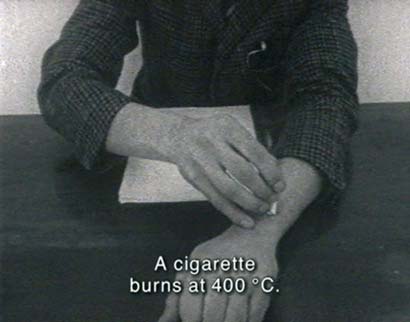
Normally, pain is triggered by a set of danger-sensing neurons, called nociceptors, that extend into the organs, muscles, and skin. Different types of nociceptors respond to different stimuli, including heat, cold, pressure, inflammation, and exposure to chemicals like cigarette smoke and teargas. Nociceptors can notify us of danger with fine-tuned precision. Heat nociceptors, for example, send out an alarm only when they’re heated to between 45 and 50 degrees Celsius (about 115 to 125 degrees Fahrenheit), the temperature at which some proteins start to coagulate and cause damage to cells and tissues.
For all that precision, we don’t automatically feel the signals as pain; often the information from nociceptors is parsed by the nervous system along the way. For instance, nociceptors starting in the skin extend through the body to swellings along the spinal cord. They relay their signals to other neurons in those swellings, called dorsal horns, which then deliver signals up to the brain stem. But dorsal horns also contain neurons coming down from the brain that can boost or squelch the signals. As a result, pain in one part of the body can block pain signals from another. If you stick your foot in cold water, touching a hot surface with your hand will hurt less.
The Rule of 72 deserves to be better known among technical people. It’s a widely-known financial rule of thumb used for understanding and calculating interest rates. But others, including computer scientist and start-up founders, are often concerned with growth rates. Knowing and applying the rule of 72 can help in developing numerical literacy numeracy around growth.
For example, consider Moore’s Law, which describes how “the number of transistors that can be placed inexpensively on an integrated circuit doubles approximately every two years.” If something doubles every two years, at what rate does it increase per month, on average? If you know the rule of 72, you’ll instantly know that the monthly growth rate is about 3%. You get the answer by dividing 72 by 24 (the number of months).
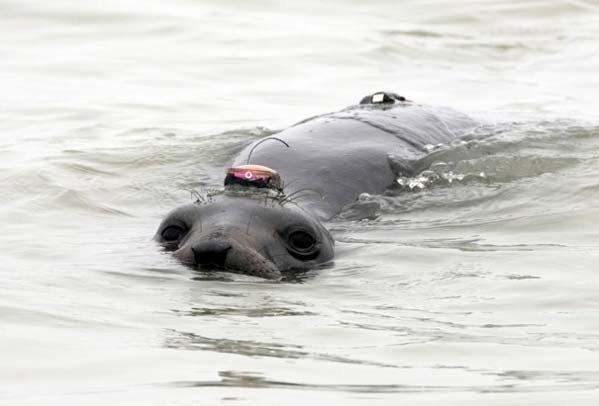
{ Many species of Pacific predators stick to familiar routes each season, according to new findings of a decade-long study that tracked 23 types of marine animals. The two most heavily trafficked corridors are the California Current along the West Coast of the U.S. and the North Pacific Transition Zone, where cold and warm water meet halfway between Alaska and Hawaii. | Washington Post | full story | photos }
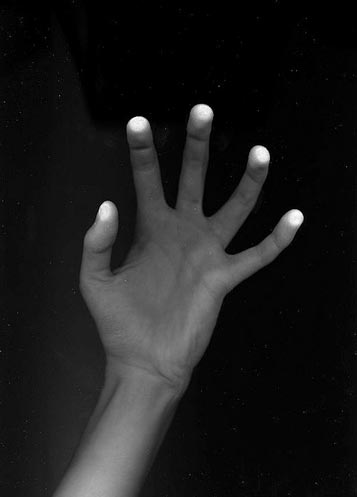
Each of your senses (sight, hearing, touch, taste, smell) has an individual, specialized hub (cortex) in the brain that collects and filters information from your sensory organs. For example, visual information from your eyes is transmitted directly to the visual cortex,housed in hind portions of the brain. Here, this information is converted into terms (patterns of electrical pulses) that the brain can understand. This filtered visual information is then sent to other regions of the brain, where it is integrated with the other forms of sensory information to create our perception. This process is called ‘multimodal integration’.
Early theories stated that the senses don’t merge until after sensory information is processed. In other words, it was believed that the sensory cortices always operated in isolation. However, about thirty years ago, psychologists began to realize that one sensory system can heavily influence the processing abilities of another. For example, your sight can affect how you brain recognizes sounds.
photo { J. Kursel }
I am fascinated with zombies. Always have been, but even more so since I took an interest in microbiology. The zombie apocalypse is the best known and best chronicled viral infection which hasn’t happened. But it could happen any day. (…)
One problem that has to do with zombification is the loss free will. Do zombies have free will? More to the point, do humans have free will?
In two papers entitled A Wasp Manipulates Neuronal Activity in the Sub-Esophageal Ganglion to Decrease the Drive for Walking in Its Cockroach Prey and On predatory wasps and zombie cockroaches — Investigations of “free will” and spontaneous behavior in insects, Ram Gal and Frederic Libersat from Ben Gurion University explore free will in cockroaches. Do cockroaches have free will, or are they just sophisticated automatons? And where do we draw the line between the two?
Gal and Libersat use the following definition for free will: the expression of patterns of “endogenously-generated spontaneous behavior”. That is, a behavior which has a pattern (i.e. not just random fluctuations) and must come from within (i.e. not entirely in response to external stimuli). They cite studies where such behavior — which they define as a “precursor of free will in insects” — is observed. They then show how this behavior is removed from cockroaches when the roaches are attacked by a wasp. (…)
So how about molecular zombies?

What Makes a Team Smarter? More Women.
There’s little correlation between a group’s collective intelligence and the IQs of its individual members. But if a group includes more women, its collective intelligence rises. (…)
The standard argument is that diversity is good and you should have both men and women in a group. But so far, the data show, the more women, the better. (…)
Many studies have shown that women tend to score higher on tests of social sensitivity than men do. So what is really important is to have people who are high in social sensitivity, whether they are men or women.
Are Fast Talkers More Persuasive?
When psychologists first began examining the effect of speech rate on persuasion, they thought the answer was cut-and-dried. In 1976 Norman Miller and colleagues tried to convince participants that caffeine was bad for them (Miller et al., 1976). The results suggested people were most persuaded when the message was delivered at a fully-caffeinated 195 words per minute rather than at a decaffeinated 102 words per minute.
At 195 words per minute, about the fastest that people speak in normal conversation, the message became more credible to those listening, and therefore more persuasive. Talking fast seemed to signal confidence, intelligence, objectivity and superior knowledge. Going at about 100 words per minute, the usual lower limit of normal conversation, was associated with all the reverse attributes. (…)
By the 1980s, though, other researchers had begun to wonder if these results could really be correct. They pointed to studies suggesting that while talking faster seemed to boost credibility, it didn’t always boost persuasion.
While it is recognized that Barbie dolls are perceived as feminine and Action figures as masculine, less is considered about the gender associations related to everyday items like the food we choose to eat. A series of studies reveal for instance that sour dairy products tend to be perceived as relatively feminine, whereas meat tends to be perceived as relatively masculine. Men are inclined to forgo their intrinsic preferences to conform to a masculine gender identity. Women, on the other hand, appear to be less concerned with making gender-congruent choices.