U.S.

‘We live not alone but chained to a creature of a different kingdom: our body.’ –Proust

413.jpg

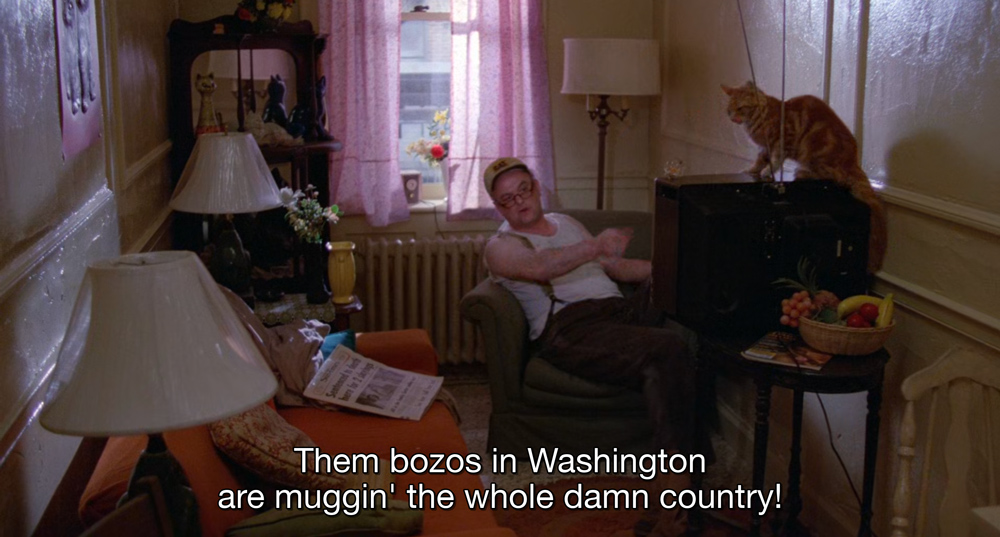
Edward Glaeser: If you look back 120 years ago or so, Detroit looked like one of the most entrepreneurial places on the planet. It seemed as if there was an automotive genius on every street corner. If you look back 60 years ago, Detroit was among the most productive places on the planet, with the companies that were formed by those automotive geniuses coming to fruition and producing cars that were the technological wonder of the world. So, Detroit’s decline is of more recent heritage, of the past 50 years. […] And it tells us a great deal about the way that cities work and the way that local economies function. […] If we go back to those small-scale entrepreneurs of 120 years ago–it’s not just Henry Ford; it’s the Dodge brothers, the Fisher brothers, David Dunbar Buick, Billy Durant nearby Flint–all of these men were trying to figure out how to solve this technological problem, making the automobile cost effective, produce cheap, solid cars for ordinary people to run in the world. They managed to do that, Ford above all, by taking advantage of each other’s ideas, each other supplies, financing that was collaboratively arranged. And together they were able to achieve this remarkable technological feat. The problem was the big idea was a vast, vertically integrated factory. And that’s a great recipe for short run productivity, but a really bad recipe for long run reinvention. And a bad recipe for urban areas more generally, because once you’ve got a River Rouge plant, once you’ve got this mass vertically integrated factory, it doesn’t need the city; it doesn’t give to the city. It’s very, very productive but you could move it outside the city, as indeed Ford did when he moved his plant from the central city of Detroit to River Rouge. And then of course once you are at this stage of the technology of an industry, you can move those plants to wherever it is that cost minimization dictates you should go. And that’s of course exactly what happens. Jobs first suburbanized, then moved to lower cost areas. The work of Tom Holmes at the U. of Minnesota shows how remarkable the difference is in state policies towards unions, labor, how powerful those policies were in explaining industrial growth after 1947. And of course it globalizes. It leaves cities altogether. […] It was precisely because Detroit had these incredibly productive machines that they squeezed out all other sources of invention–rather than having lots of small entrepreneurs you had middle managers for General Motors (GM) and Ford. […]

Russ Roberts: So, one way to describe what you are saying is in the early part of the 20th century, Detroit was something like Silicon Valley, a hub of creative talent, a lot of complementarity between the ideas and the supply chain and interactions between those people that all came together. Lots of competition, which encouraged people to try harder and innovate, or do the best they could. Are you suggesting then that Silicon Valley is prone to this kind of change at some point? If the computer were to become less important somewhere down the road or produced in a different way?

Edward Glaeser: The question is to what extent do the Silicon Valley firms become dominated by very strong returns to scale, a few dominant firms capitalize on it. I think it’s built into the genes of every industry that they will eventually decline. The question is whether or not the region then reinvents itself. And there are two things that enable particular regions to reinvent themselves. One is skills, measured education, human capital. The year, the share or the fraction in the metropolitan area with a college degree as of 1940 or 1960 or 1970 has been a very good predictor of whether, particularly northeastern or northwestern metropolitan areas, have been able to turn themselves around. And a particular form of human capital, entrepreneurial human capital, also seems to be critical, despite the fact that our proxies for entrepreneurial talent are relatively weak. We typically use things like the number of establishments per worker in a given area, or the share of employment in startups from some initial time period. Those weak proxies are still very, very strong predictors of urban regeneration, places that have lots of little firms have managed to do much better than places that were dominated by a few large firms, particularly if they are in a single industry. So, let’s think for a second about Silicon Valley. Silicon Valley has lots of skilled workers. That’s good. But what I don’t know is whether Silicon Valley is going to look like it’s dominated by a few large firms, Google playing the role of General Motors. Or whether or not it will continue to have lots of little startups. There’s nothing wrong with big firms in terms of productivity. But they tend to train middle managers, not entrepreneurs.

{ EconTalk | Continue reading }

image { Michael Wolf }

It’s go go, not cry cry

315.jpg

Is your child constantly causing trouble? […] If you live in South Carolina’s Chester or Richland Counties, you can send your kids to jail before they wind up there themselves. Through a program called STORM, parents can shell out a mere $25 to have their little troublemakers cuffed and booked for a sleepover in the slammer. Parents in nearby counties have to pay $5 more.

{ TruTV | Continue reading }

photo { Tim Head, Equilibrium, 1975 }

I’m always sad with him

313.jpg

“I love nick [Brooks], but he wasn’t good for me. . . he holds me back. I’m always sad with him. He’s 24 for f sake . . . he wants porn sex! He wants to b drunk or stoned all the time . . . he doesn’t have any goals and stops me from mine.”

[…]

The elder Brooks killed himself with a mail-order helium-tank suicide kit in 2011 at his Upper East Side apartment. He was under indictment for drugging and sexually assaulting 13 starlets during “auditions” for nonexistent films.

{ NY Post | Continue reading }

See you on the road, skag. See you like we saw your friend, The Nightrider.

imp-kerr-walk.jpg

A subtle, but significant tweak to Florida’s rules regarding traffic signals has allowed local cities and counties to shorten yellow light intervals, resulting in millions of dollars in additional red light camera fines.

{ 10 News | Continue reading }

I don’t see anything happening immediately but there could be a move in the latter part of this year or may be very early next

64.jpg

A Manhattan fortune teller will be jailed for a year after taking more than $650,000 in cash from an Upper East Side woman by promising to “cleanse” the money.

Swindling soothsayer Janet Miller, 39, also tricked the wealthy victim into turning over paintings and jewelry as “sacrifices” to keep the devil away, and even conned her into buying and handing over a couple of Rolexes — all to exterminate “bad energy,” Manhattan prosecutors charged.

{ NY Post | Continue reading }

related { The blindfold is to minimise the shock which the flashlight could cause to the eyes of the medium, who is extremely sensitive during this stage of the phenomena }

With the poison of a junkie’s broken promise on his lip

38.jpg

Last night, the Metropolitan Museum of Art in New York hosted the 2013 Met Gala. This year’s theme was “Punk: From Chaos To Couture.” For many celebrities, this was the first time they had used the word “punk” in a sentence that wasn’t “Have my assistant get me Daft Punk tickets.”

[…]

“I skipped punk and went straight to couture. I never did punk.”
 —Andre Leon Talley, editor at large of Vogue/total fucking clown


“I did not [have a punk phase]. That’s why I think my version of punk for me is not probably the mohawk, typical punk that you’d sort of envision. A little bit more like ‘romantic punk.” 
—Kim Kardashian, notable reality TV shithead


“I don’t think I fully understood the theme.”
 —Kate Upton, human Viagra for Terry Richardson

{ Jaded Punk | Continue reading }

Reeve Gootch was right and Reeve Drughad was sinistrous

61.jpg

Are all telephone calls recorded and accessible to the US government? A former FBI counterterrorism agent claims that this is the case.

{ Guardian | Continue reading }

images { 1. Dave Willardson, Rolling Stone, 1976) | 2. Bug, 1975 }

The milk falls; goodbye calf, cow, pig, brood of chickens.

6.jpg

The hipster haunts every city street and university town. Manifesting a nostalgia for times he never lived himself, this contemporary urban harlequin appropriates outmoded fashions (the mustache, the tiny shorts), mechanisms (fixed-gear bicycles, portable record players) and hobbies (home brewing, playing trombone). He harvests awkwardness and self-consciousness. Before he makes any choice, he has proceeded through several stages of self-scrutiny.

{ Christy Wampole/NY Times via | Gothamist | Continue reading }

In the water of a pure stream, a fasting wolf came by, looking for something

41.jpg

Hurricane Sandy was the largest storm to hit the northeast U.S. in recorded history, killing 159, knocking out power to millions, and causing $70 billion in damage in eight states. Sandy also put the vulnerability of critical infrastructure in stark relief by paralyzing subways, trains, road and air traffic, flooding hospitals, crippling electrical substations, and shutting down power and water to tens of millions of people. But one of the larger infrastructure failures is less appreciated: sewage overflow.

Six months after Sandy, data from the eight hardest hit states shows that 11 billion gallons of untreated and partially treated sewage flowed into rivers, bays, canals, and in some cases, city streets, largely as a result of record storm-surge flooding that swamped the region’s major sewage treatment facilities. To put that in perspective, 11 billion gallons is equal to New York’s Central Park stacked 41 feet high with sewage, or more than 50 times the BP Deepwater Horizon oil spill. The vast majority of that sewage flowed into the waters of New York City and northern New Jersey in the days and weeks during and after the storm.

{ Climate Central | PDF }

L.L. went to hell, gonna rock the bells

227.jpg

On July 16, 2012, a painting by a little-known artist sold at Christie’s for $74,500, nearly ten times its high estimate of $8,000. The work that yielded this unexpected result — an acrylic teal-hued painting of a rocky coast called “Nob Hill” — was not the work of a 20-something artist finishing up his MFA. It was a painting created in 1965, and the artist, Llyn Foulkes, is 77 years old and has been working in relative obscurity in Los Angeles for the past 50 years. In March, the Hammer Museum in Los Angeles mounted a retrospective of his work, which will travel to the New Museum in June, marking the first time Foulkes will have had a retrospective at a New York museum. […]

The new interest in older artists isn’t just about scholarly rediscovery. The interest has less to do with the necessity of unearthing historical material to understand an artist’s career arc and more to do with feeding an insatiable market. “Unlike the past model where most galleries hosted one new exhibition every four to six weeks, many galleries now have two or more new exhibitions every turn-over,” said Todd Levin, and art advisor and director of Levin Art Group. “There’s a increasing need to fill the constantly expanding number of exhibition opportunities.”

Today, there are some 300 to 400 galleries in New York compared with the roughly 70 galleries in New York in 1970. As for the number of shows galleries mount each year, that has likewise increased: Gagosian mounted 63 last year at its galleries worldwide, David Zwirner had 14 shows at its spaces in New York and London, and Pace had 36 across its three galleries in New York, Beijing, and London.

{ Artinfo | Continue reading }

photo { Diane & Allan Arbus, Self-portrait, 1947 }

There is a flip side to that coin

48.jpg

{ The guy on the roof… why is he hiding behind such heavy pixelation? }

‘No scanners here, just ears, and they’re being shattered by the sirens.’ –M. Monalisa Gharavi

221.jpg

In psychology literature, “ask for the moon, settle for less” is known as the “door in the face” (DITF) technique. Unlike the “foot in the door” technique, in which the fulfillment of a small request makes people more likely to fulfill a large request, DITF uses an unreasonable request as a way of making somebody more likely to subsequently fulfill a more moderate request. The technique was first demonstrated by Robert Cialdini’s famous 1975 experiment in which students became more likely to volunteer for a single afternoon after first being asked to volunteer for an afternoon every week for two years.

So, can research on DITF shed some light on why pursuing an assault weapons ban didn’t pan out?

{ peer-reviewed by my neurons | Continue reading }