new york
“Find your sugar baby,” the site exhorted its users.
This year, Paul Aronson, an 84-year-old from Manhattan, contacted a 17-year-old girl, Shaina Foster, through the site and took her out to dinner. On a second date, Ms. Foster brought along her twin sister, Shalaine.
For a few hours on Oct. 1, the evening looked as if it might turn into an old man’s fantasy. The three dined at an expensive restaurant in Midtown. Then Mr. Aronson invited the teenagers to have a drink with him at the four-story brick townhouse he owns on East 38th Street.
He bought a bottle of raspberry-flavored rum from a liquor store on the way, a defense lawyer said. But instead of receiving caresses or whispered flirtations, Mr. Aronson ended up tied to a coffee table for 20 hours. […]
Prosecutors say the two girls bound him with zip ties, took $470 in cash from his wallet and went on a spending spree with his credit cards, buying makeup and clothes. […]
Before he was tied up, Mr. Aronson had given the teenagers a tour of his townhouse and let them play with his tiny dog, a Yorkshire terrier named Muffins, Mr. Kennedy said. Then he poured them glasses of rum and asked them about their sex lives. […]
“He asked to do things I wasn’t going to do,” she told Detective Darryl Ng at the 17th Precinct after the girls were arrested on Oct. 21. “He is ugly, old and disgusting. I tied him up. I took his money and left. He was starting to creep me out.”
{ NY Times | Continue reading }
new york, pipeline, relationships | November 27th, 2014 11:57 am
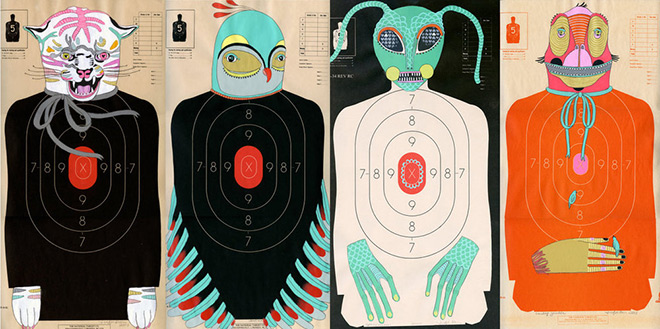
“There’s as much biodiversity in the soils of Central Park as we found in the soil… from the Arctic to Antarctica” […] almost 170,000 different kinds of microbes. […] The team also found 2,000 species of microbes that are apparently unique to Central Park.
{ NPR | Continue reading }
germs, new york, science | October 2nd, 2014 12:56 pm
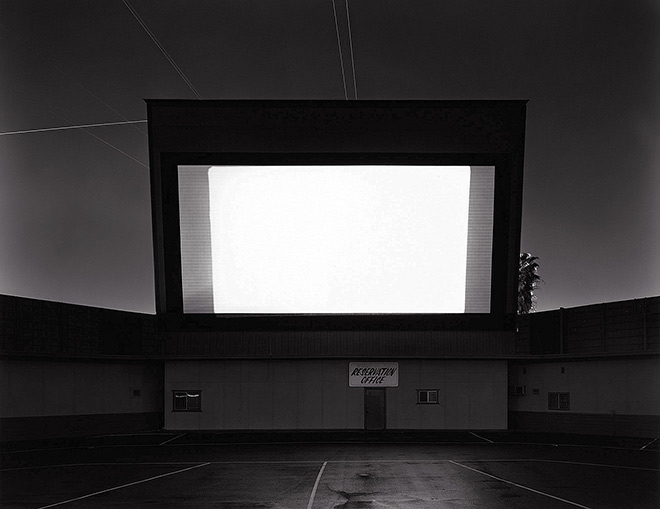
She also learned an old cop trick: If you’re recovering a body in an apartment building, ask every tenant to make coffee — it covers the smell. “Oldest trick in the book,” one officer told her. […]
She began, as all autopsies do, by inserting a needle into the side of each eye to collect fluid — a delicate procedure Melinek perfected after once popping out a cadaver’s glass eyeball. […] Then she removed Booker’s testes, took a samples from each, and put them back in the scrotum. […]
There was the subway jumper at Union Square, for example, whose body was recovered on the tracks of the uptown 4 train with no blood — none at the scene, none in the body itself. She’d never seen anything like it, and only CME Hirsch could explain: The massive trauma to the entire body caused the bone marrow to absorb all the blood. […]
In one case, a man was shot in the chest, but the bullet was found in his liver.
{ NY Post | Continue reading }
photo { Hiroshi Sugimoto }
blood, new york | August 4th, 2014 6:52 am
new york | March 25th, 2014 9:04 am
architecture, flashback, new york, paris | March 13th, 2014 11:42 am
animals, new york | March 7th, 2014 11:22 am
One of them had a connection with dealers from South Jamaica — and brokered an arrangement where the New Yorkers would purchase narcotics from their California partners and then sell the drugs on consignment in the city, the sources said.
Their first transaction went smoothly, with the California trio shipping one kilo to their Queens partners, who sold the coke and promptly mailed a share of the money back to California, according to the sources.
But the New York dealers were slow sending the Californians their cut after a second transaction, the sources said.
And in their third and final deal, the South Jamaica goons not only kept all the proceeds after selling three kilos — they then tried to lure their business partners to New York City to assassinate them, according to the sources.
But only Woodard showed up on Dec. 10, 2012 […] and was murdered execution-style by a gunman in broad daylight on busy West 58th Street off Seventh Avenue.
{ NY Post | Continue reading }
drugs, guns, new york | February 10th, 2014 9:21 am
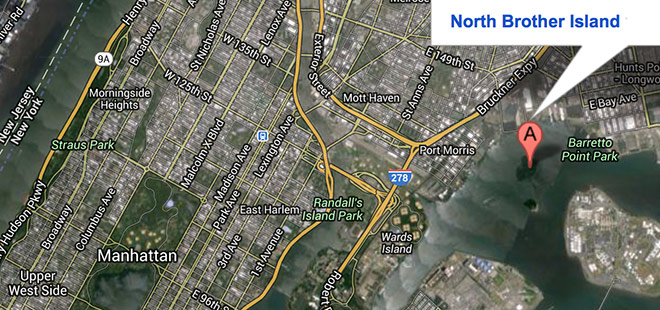
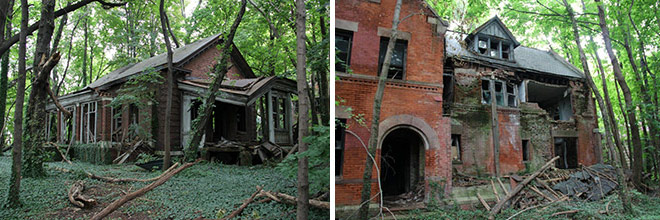
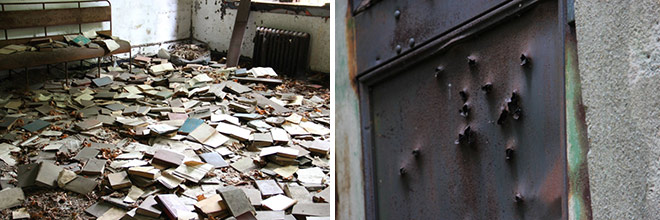
{ North Brother Island was in use by New York City from 1885 to 1963 as a hospital complex to quarantine and treat people suffering from smallpox and typhoid fever then a rehab center and a housing project for WWII vets. In the 1950s a center opened to treat adolescent drug addicts. Heroin addicts were confined to this island and locked in a room until they were clean. By the early 1960s widespread staff corruption and patient recidivism forced the facility to close. It is now uninhabited and designated as a bird sanctuary. | Rsvlts | more photos | Read more: NY Times, Wikipedia }
architecture, new york | February 6th, 2014 4:21 pm

Deaths from drug overdoses increased by 102 percent between 1999 and 2010. […] As a recovering addict who still works with active users in communities where heroin is sold on the street, I can tell you that it’s particularly dangerous out there right now. Recently, an unpredictable and hard-to-track bad batch of Fentanyl-tainted heroin dipped and dodged its way through the mid-Atlantic. […]
Fentanyl-tainted bags go fast; ironically, when news of a batch laying users low spreads on the streets, heavy users seek the potent bags out by their brand stamp. Overdoses become advertisements for strong product. […]
Between 2007 and 2012, the number of heroin users ages 12 and up increased from 373,000 to 669,000.
{ The Atlantic | Continue reading }
Nearly 70 small bags of heroin and enough prescription drugs to fill a pharmacy were found in the Greenwich village apartment where Philip Seymour Hoffman died of an apparent drug overdose. […] Investigators are trying to find the drug dealer who supplied the actor with the heroin […] labeled “Ace of Spades,” or “Ace of Hearts.” […] The law enforcement source said that a process called “a nitro dump” could be key to cracking the case. “Basically what that is, is any time we make a narcotics arrest we include the brand name on the arrest report and store it in our system so our investigators can see where those brands are being sold,” the source explained. Once they determine a location, they can zero in on the dealer or dealers selling that particular brand.
{ NY Post | Continue reading }
celebs, drugs, new york | February 3rd, 2014 4:32 pm
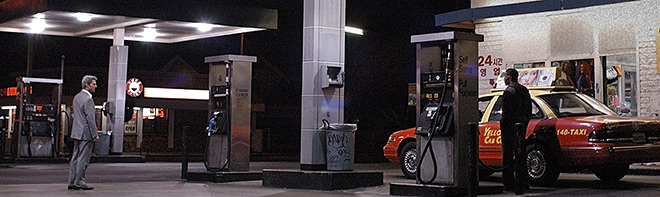
After Michael Mann set out to direct Collateral, the story’s setting moved from New York to Los Angeles. This decision was in part motivated by the unique visual presence of the city — especially the way it looked at night. […] That city, at least as it appears in Collateral and countless other films, will never be the same again. L.A. has made a vast change-over to LED street lights, with New York City not far behind.
{ No Film School | Continue reading }
l.a. pros and cons, new york, showbiz, technology | February 3rd, 2014 2:48 pm
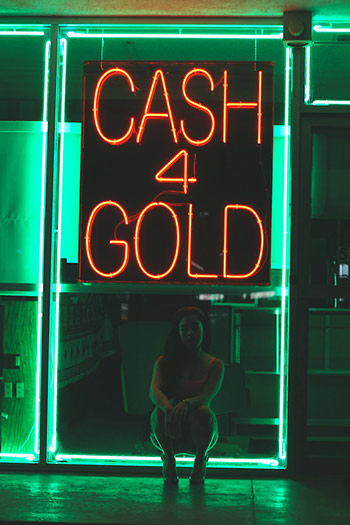
Shaun Khubchandani’s 10-week internship at Citigroup […] he was paid a $70,000 annual salary prorated on a weekly basis, or about $1,300 per week. […] a typical day during his internship:
8 a.m.: Wake up.
8:45 a.m.: Board subway at Columbus Circle to Citigroup’s offices in Tribeca.
9-9:30 a.m.: Arrive at the office.
9:30 a.m.–12 p.m.: Do light tasks, like reading S-1 filings or internal memos, or double-checking numbers in Excel spreadsheets.
12-12:30 p.m.: Grab lunch with fellow interns at a nearby Whole Foods—ideally a prosciutto-and-ham panini, with bread pudding for dessert.
1 p.m.–5 p.m.: Work alongside analysts, assisting them however possible. Ask for feedback on financial models or help with difficult calculations.
5 p.m.–6 p.m.: Assigned to a project—such as updating a PowerPoint slideshow or hard copies of client-presentation materials with the latest market data—by a managing director on his or her way out the door, sometimes to be completed by the next morning.
8 p.m.: Order dinner delivery with other interns and the analysts, courtesy of the bank: Italian on Mondays, Thai on Tuesdays, salads on Wednesdays and tacos on Thursdays. (On Fridays, dine out.)
10:30 p.m.–2 a.m.: Leave for the night.
{ WSJ | Continue reading }
economics, experience, new york | January 14th, 2014 12:16 pm
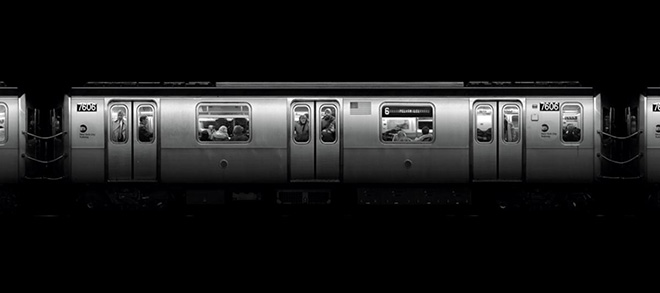
{ Magyar was immersed in a long-running techno-art project called Stainless, creating high-resolution images of speeding subway trains and their passengers, using sophisticated software he created and hardware that he retrofitted himself. | full story }
new york, photogs, technology | January 9th, 2014 8:41 am
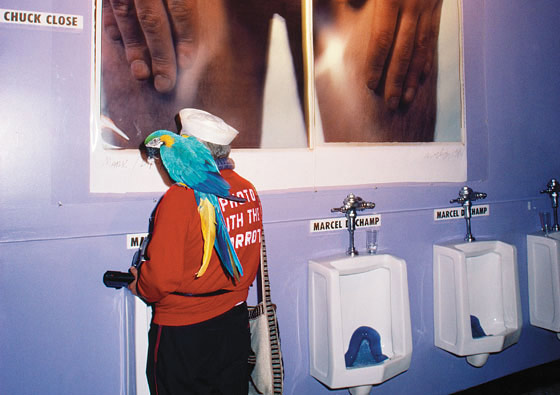
{ The bathroom, which became unisex over time. Serge Becker, Area’s art director: “We beat out a door at some point between the men’s and women’s room and ended up just leaving it.” }
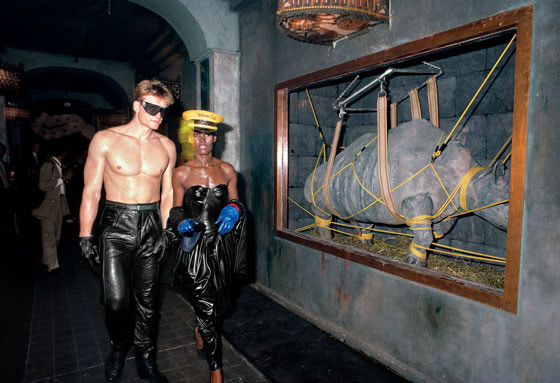
{ Dolph Lundgren and Grace Jones at Area’s confinement-themed party }
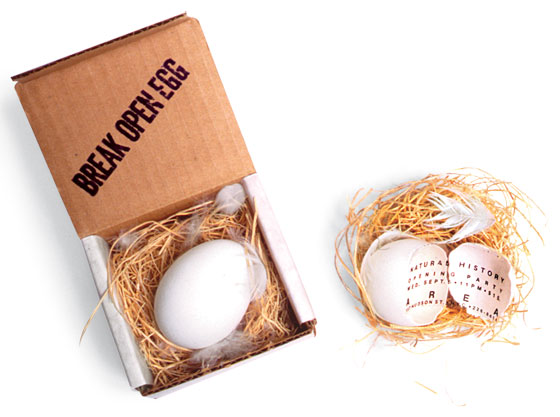
{ Invitation for the Natural History party | Photos from Area: 1983–1987 | More: Inside Area Club }
flashback, new york | November 5th, 2013 2:46 pm

Sex and the City’s antepenultimate episode… […] This was the episode in which gauche, chain-smoking “Page Six” staple “Lexi Featherston” did some coke at a geriatric party, yelled, “This used to be the most exciting city in the world, and now it’s nothing but smoking near a fuckin’ open window,” and then took a header out said window. […]
Minimum estimates now put the number of New York City millionaires at around 400,000; there could be as many as 650,000. […] It’s a bedrock pillar of nickels and dimes all the way down, a billion fees a second, a burn rate, a waste, a dick joke, a $40,000 storefront in Brooklyn, one more year of fat bonus before you say you’ll finally quit, one more “space” disrupted, a Balthazar breakfast, a billion uniques, a whale, a Citation X, an acquisition, a bomb, a deposition, a bust.
{ Choire Sicha/NY Magazine | Continue reading }
experience, new york | September 28th, 2013 7:57 pm
CL > new york > queens > all personals > missed connections
Seen on the N Train to Queensboro…..did we have something? - w4m - 26 (queens)
Posted: 2013-08-08, 9:22PM EDT
I got on at Union Square, you were already seated on the train. Actually, you were kind of sprawled halfway under one of the seats, sort of lying on the floor. I liked your style. Most people just sit on the seats. I can tell you see things differently.
Me, wearing a flared denim vintage skirt, white blouse, glasses. Small red pillbox hat. You, smooth-looking skin, distant stare. Kind of pale grey complexion. I kept trying to catch your eye over my copy of Damien Hirst’s biography, but you were preoccupied with something else.
You seemed like you had such faraway eyes. Black eyes. Like a doll’s eyes. What’s behind those eyes? I’d love to find out. I like the Discovery Channel, romantic movies, bicycles, picnics in the park, and deep-sea fishing. I got off at Queensboro, but I’m still wishing I’d said hello. Can we go for sushi sometime? Drop me a line.
{ craigslist | Continue reading }
background reading { Early on Aug. 8 ,2013 in New York the conductor aboard a Ditmars-bound N train at Queensboro Plaza reported a shark aboard the train in car }
new york, underground | August 9th, 2013 11:11 am
Darius McCollum has been arrested 29 times over the past 30 years for a series of transit-related crimes ranging from impersonating subway workers to stealing buses. […]
He first drew notice in 1981, when as a 15-year-old he operated an E train six stops from 34th Street to the World Trade Center without the conductor or passengers reporting anything amiss.
{ WSJ | Continue reading }
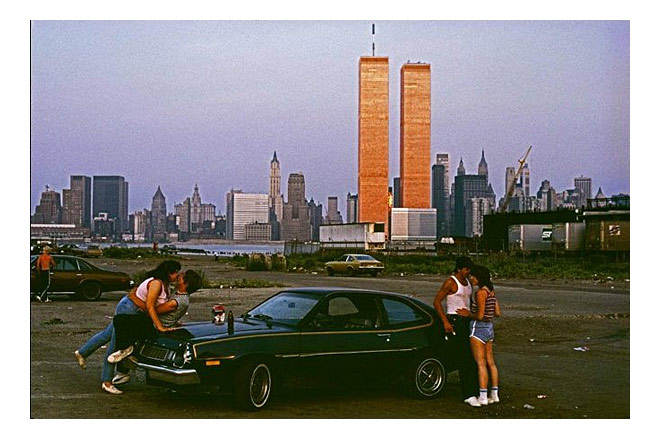
photo { Thomas Hoepker, Lover’s Lane, New Jersey, 1983 }
motorpsycho, new york, transportation | July 17th, 2013 8:23 am
new york, visual design | June 26th, 2013 11:26 am
flashback, new york | June 10th, 2013 1:22 am
“I love nick [Brooks], but he wasn’t good for me. . . he holds me back. I’m always sad with him. He’s 24 for f sake . . . he wants porn sex! He wants to b drunk or stoned all the time . . . he doesn’t have any goals and stops me from mine.”
[…]
The elder Brooks killed himself with a mail-order helium-tank suicide kit in 2011 at his Upper East Side apartment. He was under indictment for drugging and sexually assaulting 13 starlets during “auditions” for nonexistent films.
{ NY Post | Continue reading }
new york, relationships | May 16th, 2013 3:05 am