
photogs
Three Billboards is a good damn movie. I give it two billboards up!
Here, we present a method that estimates socioeconomic characteristics of regions spanning 200 US cities by using 50 million images of street scenes gathered with Google Street View cars.
Using deep learning-based computer vision techniques, we determined the make, model, and year of all motor vehicles encountered in particular neighborhoods.
Data from this census of motor vehicles, which enumerated 22 million automobiles in total (8% of all automobiles in the United States), were used to accurately estimate income, race, education, and voting patterns at the zip code and precinct level.
The resulting associations are surprisingly simple and powerful. For instance, if the number of sedans encountered during a drive through a city is higher than the number of pickup trucks, the city is likely to vote for a Democrat during the next presidential election (88% chance); otherwise, it is likely to vote Republican (82%).
{ PNAS | PDF }
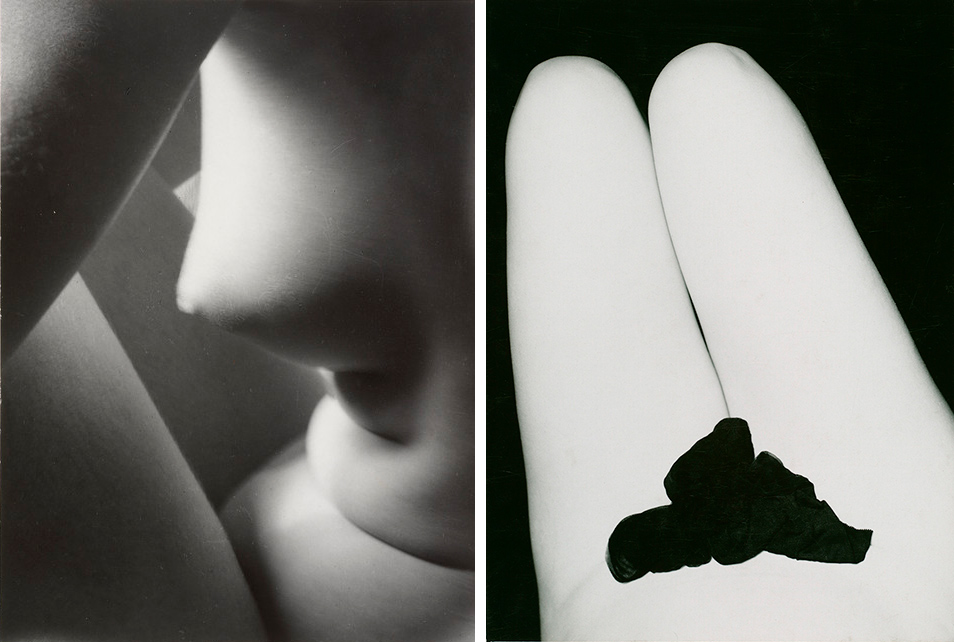
photo { Tod Papageorge }
‘I shall not speak, I shall not think: But endless love will mount in my soul.’ –Rimbaud
To test the relationship between ambient temperature and personality, we conducted two large-scale studies in two geographically large yet culturally distinct countries: China and the United States. […] Our findings provide a perspective on how and why personalities vary across geographical regions beyond past theories (subsistence style theory, selective migration theory and pathogen prevalence theory). As climate change continues across the world, we may also observe concomitant changes in human personality.
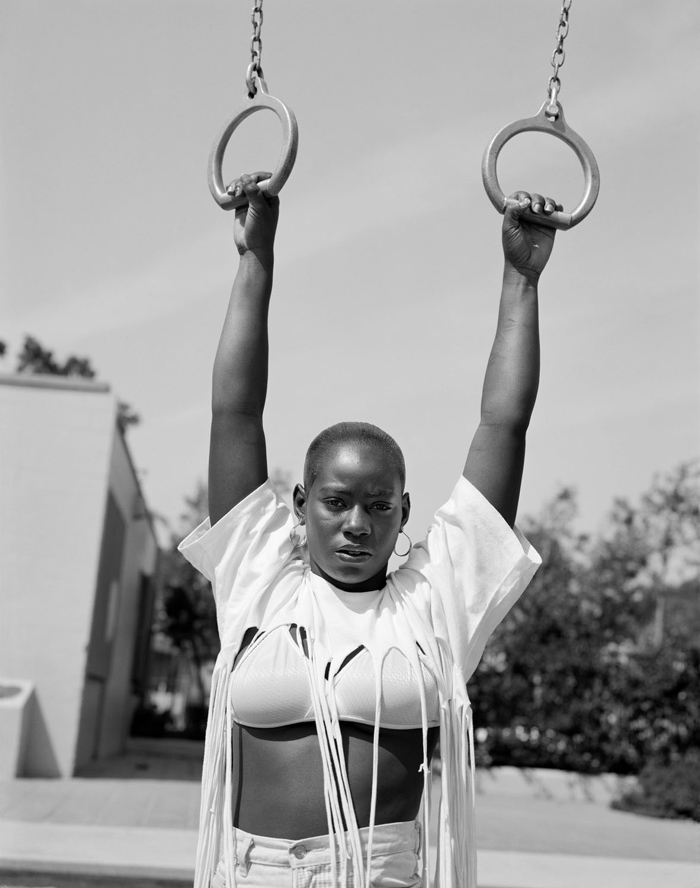
photo { Dana Lixenberg, J 50, 1993 }
It was put in the newses what he did, nicies and priers, the King fierceas Humphrey, with illysus distilling, exploits and all
The Food and Drug Administration has approved the first digital pill for the US which tracks if patients have taken their medication. The pill called Abilify MyCite, is fitted with a tiny ingestible sensor that communicates with a patch worn by the patient — the patch then transmits medication data to a smartphone app which the patient can voluntarily upload to a database for their doctor and other authorized persons to see. Abilify is a drug that treats schizophrenia, bipolar disorder, and is an add-on treatment for depression.
Like in much of theoretical physics, the answer is effectively a non-answer

Strange-face illusions are produced when two individuals gaze at each other in the eyes in low illumination for more than a few minutes.
Usually, the members of the dyad perceive numinous apparitions, like the other’s face deformations and perception of a stranger or a monster in place of the other, and feel a short lasting dissociation. […]
Strange-face illusions can be considered as ‘projections’ of the subject’s unconscious into the other’s face. In conclusion, intersubjective gazing at low illumination can be a tool for conscious integration of unconscious ’shadows of the Self’ in order to reach completeness of the Self.
photo { Richard Kern }
‘Time is what keeps everything from happening at once.’ —Ray Cummings
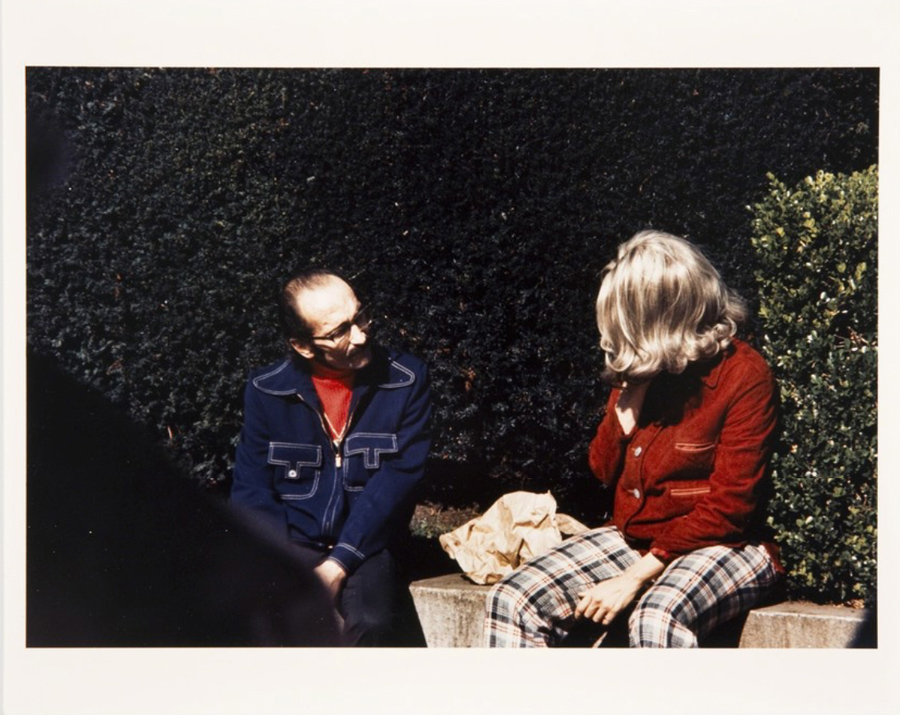
{ Lynn Hershman Leeson, Roberta and Blaine in Union Square, 1975 }
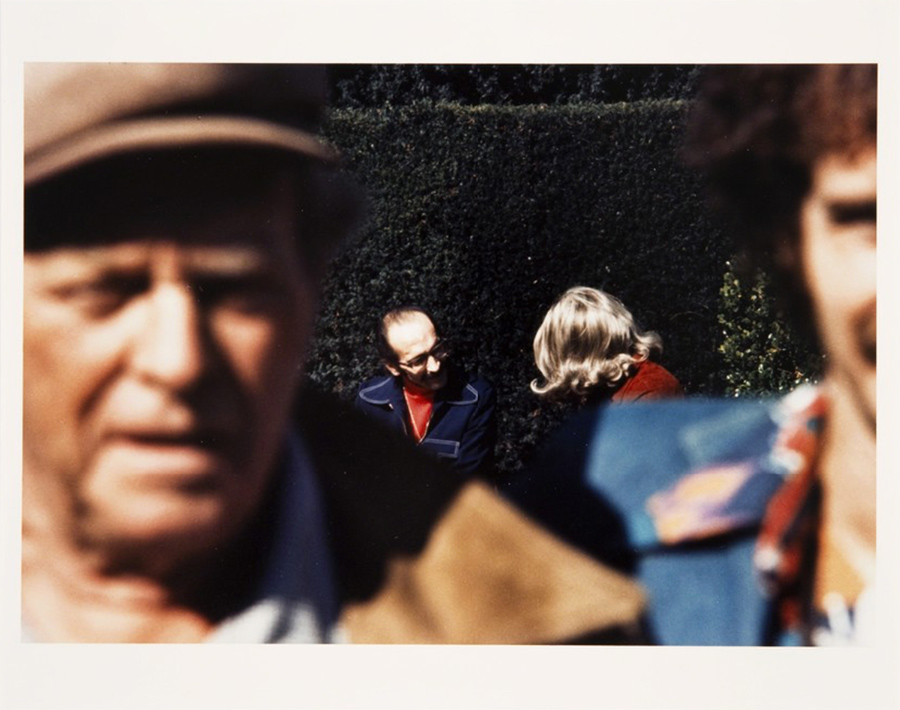
{ Lynn Hershman Leeson, Roberta and Blaine in Union Square (Close Up), 1975 }
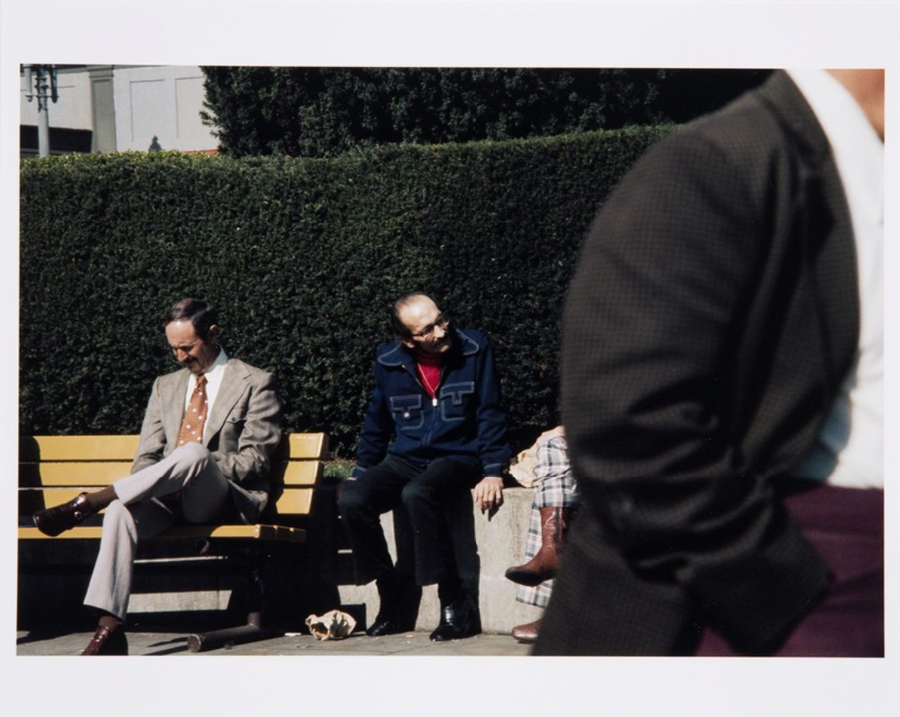
{ Lynn Hershman Leeson, Roberta and Blaine in Union Square, Roberta Missing, 1975 }
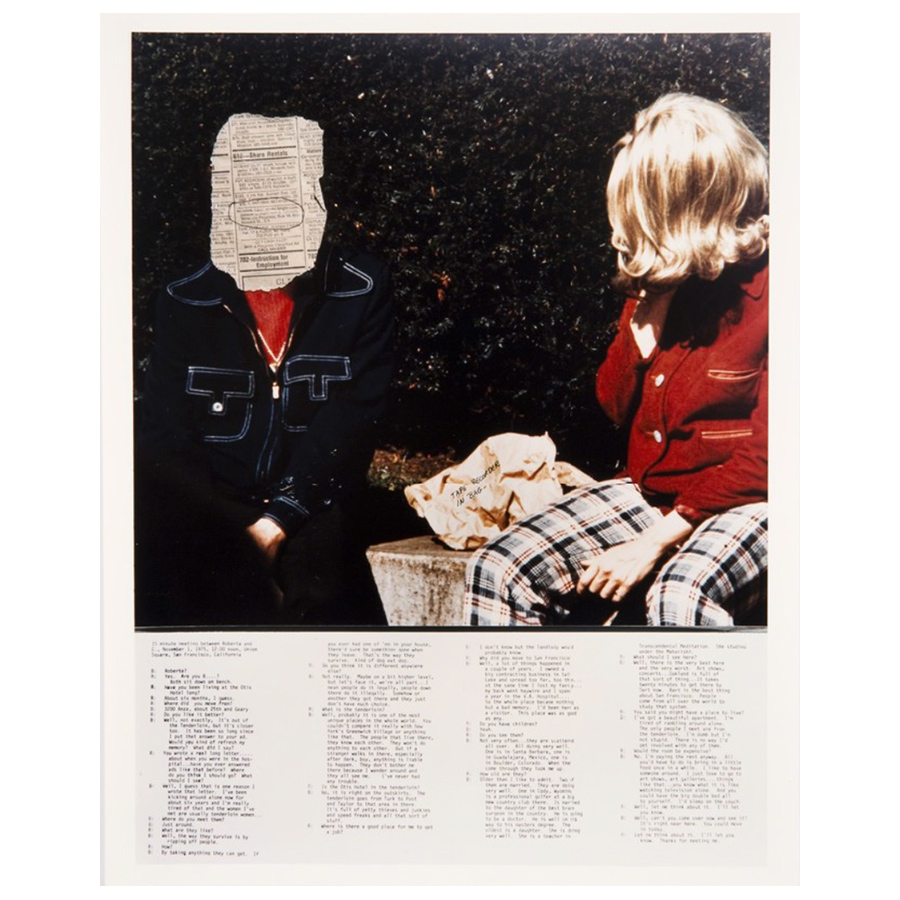
{ Lynn Hershman Leeson, Roberta and Blaine in Union Square, Blaine and Transcription, 1975 }
DECIM8R
Seth Shostak, senior astronomer at the SETI Institute in Mountain View, California, sees Superman as a great example of what not to look for in the search for alien life.
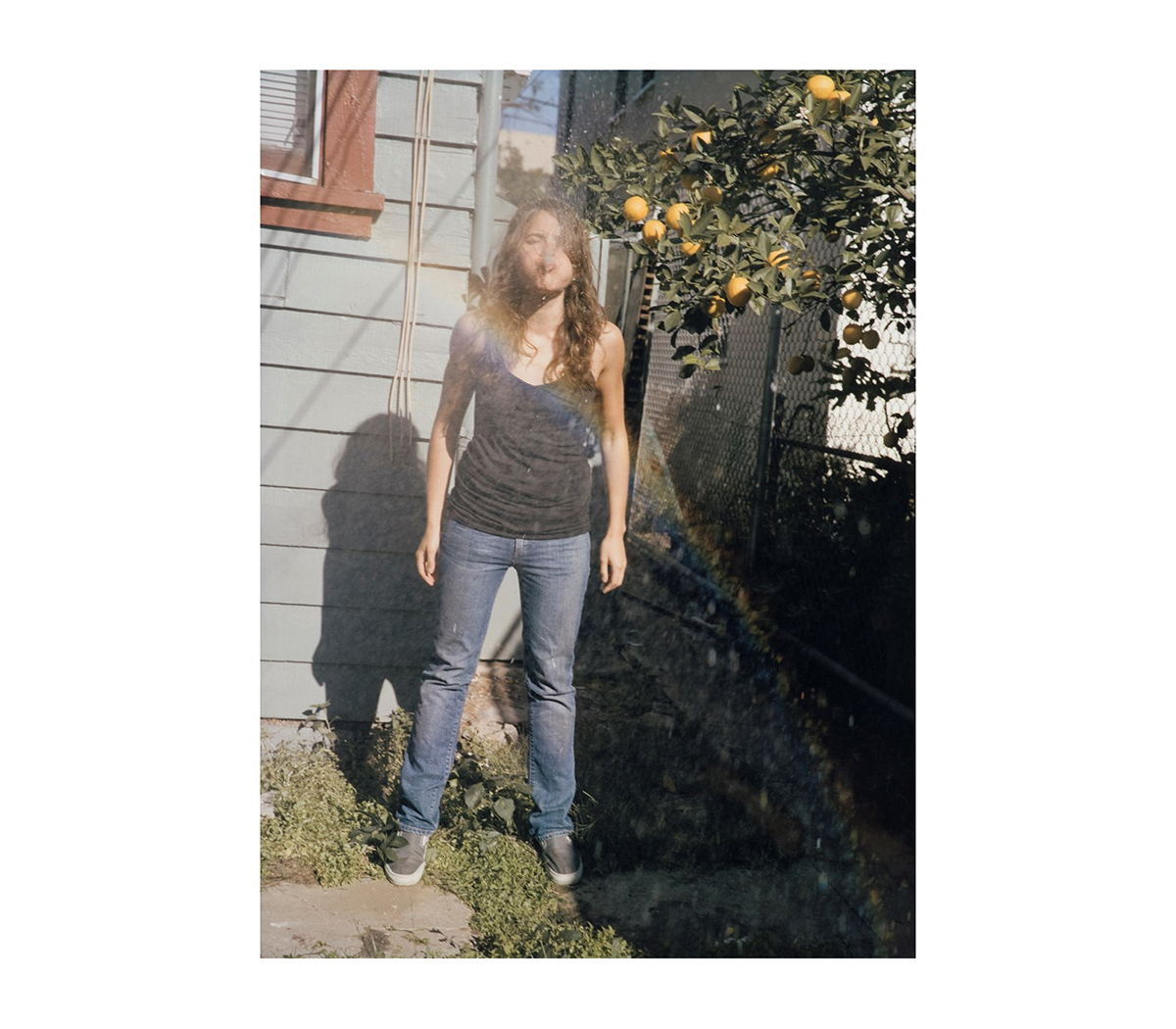
photo { Melanie Schiff, Spit Rainbow, 2006 }
unrelated { Gilbert Baker, creator of the rainbow flag, has died }
No more coats and no more home
Postmodernism has, to a large extent, run its course [despite having made the considerable innovation of presenting] the first text that was highly self-conscious, self-conscious of itself as text, self-conscious of the writer as persona, self-conscious about the effects that narrative had on readers and the fact that the readers probably knew that. […] A lot of the schticks of post-modernism — irony, cynicism, irreverence — are now part of whatever it is that’s enervating in the culture itself.
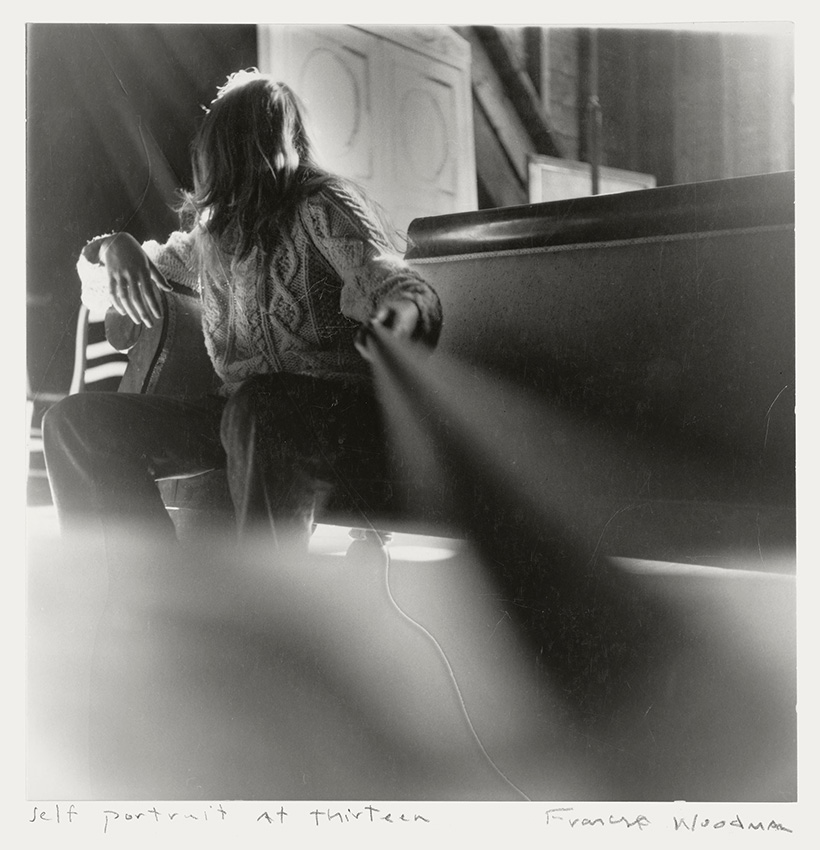
photo { Francesca Woodman, Self-portrait at 13, Boulder, Colorado, 1972 | Photography tends not to have prodigies. Woodman, who committed suicide in 1981 at age 22, is considered a rare exception. | NY Review of Books | full story }
The world’s current hottest pepper, the Carolina Reaper
Our objective was to analyze the association between consumption of hot red chili peppers and mortality. […] The frequency of hot red chili pepper consumption was measured in 16,179 participants at least 18 years of age. […]
Consumption of hot red chili peppers was associated with a 13% reduction in the instantaneous hazard of death. Similar, but statistically nonsignificant trends were seen for deaths from vascular disease, but not from other causes. In this large population-based prospective study, the consumption of hot red chili pepper was associated with reduced mortality.
‘We may also attack simply to become aware of our own strength.’ —Nietzsche
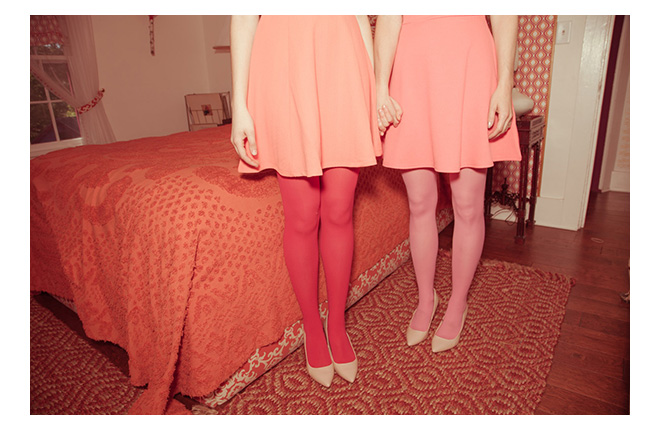
We found that women experience more jealousy toward women with cosmetics, and view these women as more attractive to men and more promiscuous.
photo { Bon Jane }
Finally, we marry to make a nice feeling permanent. We imagine that marriage will help us to bottle the joy we felt when the thought of proposing first came to us.
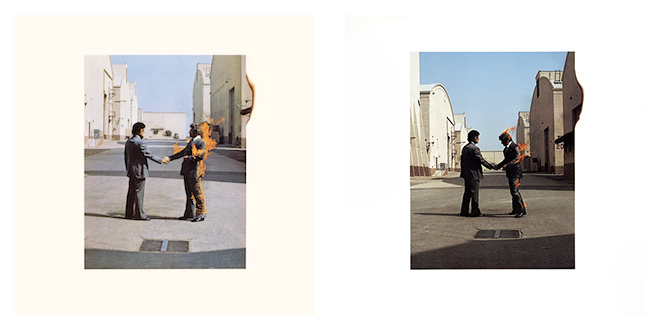
{ Storm Thorgerson, cover for Pink Floyd’s album Wish You Were Here, 1975 | US release, UK release }
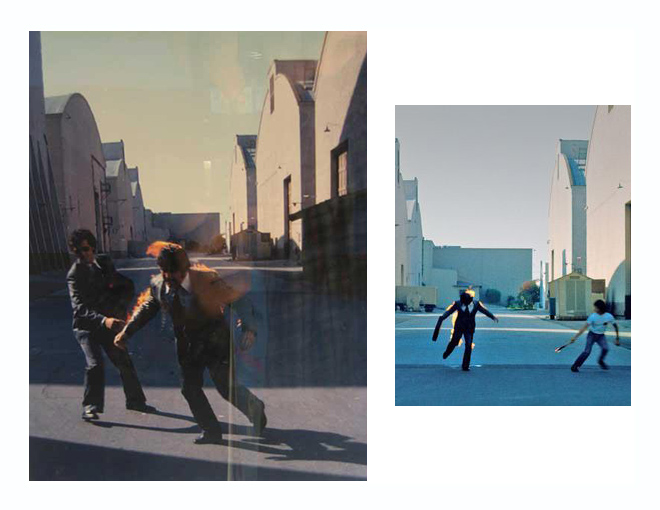
For Pink Floyd’s 1975 triple platinum Wish You Were Here album, Capitol Records execs headed to the L.A. offices of Stunts Unlimited. Ronnie Rondell, 59, a veteran of TV shows such as Baretta and Charlie’s Angels, was cast as the man on fire. “I got $500 and only worked an hour.” Fellow stuntman Danny Rogers, 53, the glad-hander, was paid only $250 but caught a lot less heat during the carefully controlled shoot on a nearby movie lot, where a crew armed with fire extinguishers stood by. Rondell’s suit was painted with rubber cement and ignited three times before it ripped and his flame-retardant long Johns peeked through the holes. His eyebrows and eyelashes were singed in the process. “It’ll happen in a heartbeat,” says Rondell. “The fire wraps around your face real quick, like a barbecue thing. The wig was fried, it melted up into a ball.”
‘This life is a hospital where each patient is possessed by the desire to change his bed.’ –Beaudelaire

For three years, she has calculated the cost of being different—that is, how much harder do you have to work as a woman, or as a gay man, to get the same jobs and the promotions as a straight, white man? […]
[S]he built models to measure how good people were at jobs they never had. This gave her the cost, or tax, in terms of the lifetime opportunity cost of lost work, the bill for extra degrees, or the extra experience needed to have the same opportunities as men from the dominant demographic group.
These are the results a few of her calculations: it costs about £38,000 ($54,000) to be a gay man in England; women in the US tech industry pay a tax of between $100,000 and $300,000; and women in tech in Hong Kong or Singapore face an even steeper $800,000 to $1.5 million.
photo { Chip Litherland, using expired film }
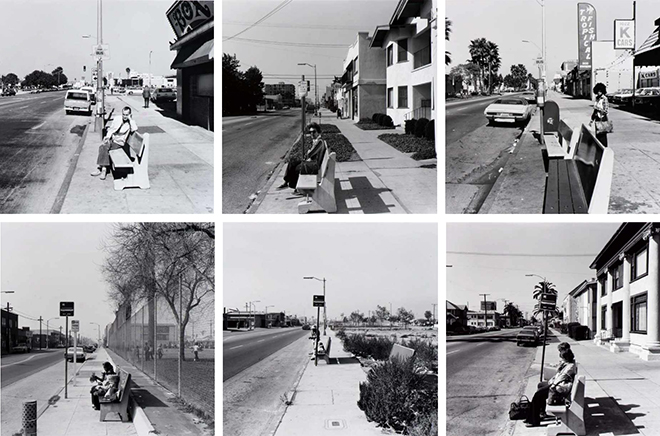
The monkish monsignor, with a head full of plaster
Previous studies have found that facial appearance can predict both the selection and performance of leaders. Little is known about the specific facial features responsible for this relationship, however.
One possible feature is mouth width, which correlates with the propensity for physical combat in primates and could therefore be linked to one’s perceived dominance and achievement of greater social rank. […]
We observed that mouth width correlated with judgments of CEOs’ leadership ability and with a measure of their actual leadership success. Individuals with wider mouths were also more likely to have won U.S. senate, but not gubernatorial, races. Mouth width may therefore be a valid cue to leadership selection and success.
{ Journal of Experimental Social Psychology | Continue reading }
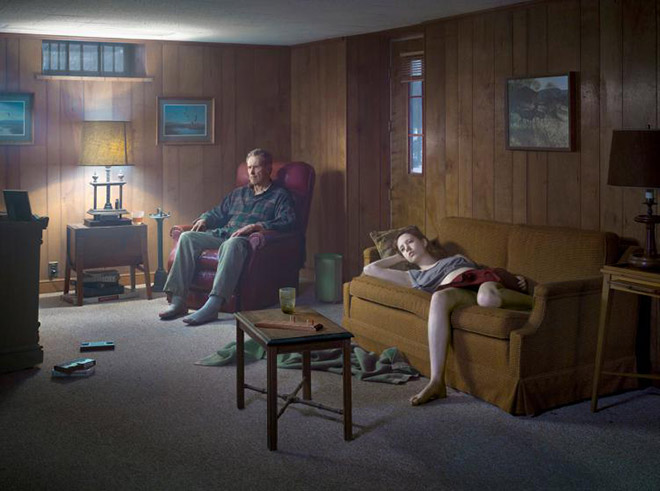
photo { Gregory Crewdson }
2 glocks that’s what’s up
Crime statistics are notoriously opaque and faulty. Data are often manipulated for political reasons. Even the city points out the discrepancy can be explained by a change in how shootings are measured. The disconnect between shooting and murder may come down to measurement, or it could reveal something much worse: New Yorkers are getting better at murder.
According to Columbia economics professor Dan O’Flaherty, the odds of someone firing a gun and actually hitting another person is pretty low. And even if you do hit your target, there’s only a 25% chance she’ll die. Four things can increase the odds of shooting and killing someone:
1. Lots of training and practice to make you a better shot
2. Standing closer to the intended victim
3. Using a higher caliber weapon, which increases the likelihood of doing damage when you hit someone
4. Using a weapon that fires more bullets at once
A change in any of these factors could produce more gun-shot murders and fewer shots fired. It’s precisely what happened in Newark between 2000 and 2006 when gun shot murders were up (unlike the rest of the country) and shots fired went down. […] They looked at crime and autopsies and concluded that all four factors played a role. Gang members used higher caliber and more semi-automatic weapons, they were better shots, and killed more people at close range. They attribute these changes to lax law enforcement and prison reorganization, which led to more networking among gangs and escalated gang violence. […]
O’Flaherty says it’s too soon to tell if that’s what’s happening in New York right now. When the odds of killing anyone are so small to begin with, this past year could just be a statistical anomaly.
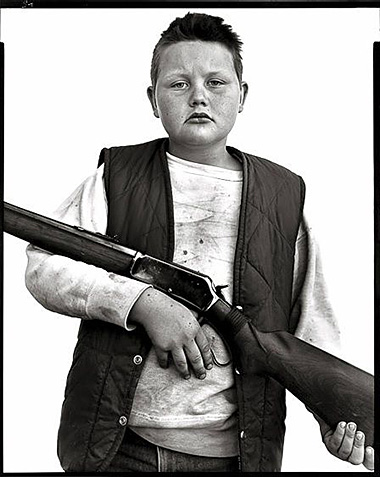
photo { Richard Avedon, B. J. Van Fleet, nine year old, Ennis, Montana, July 2, 1982 }
‘Learning to see — accustoming the eye to calmness, to patience, to letting things come up to it; postponing judgment, learning to go around and grasp each individual case from all sides.’ –Nietzsche
The present research examined whether possessing multiple social identities (i.e., groups relevant to one’s sense of self) is associated with creativity. In Study 1, the more identities individuals reported having, the more names they generated for a new commercial product (i.e., greater idea fluency). […] Results suggest that possessing multiple social identities is associated with enhanced creativity via cognitive flexibility.
{ Personality and Social Psychology Bulletin | Continue reading }
photo { Gregory Miller }
‘How brief a blaze a woman’s love will yield if not relit by frequent touch and sight.’ –Dante
Touch is a powerful tool for communicating positive emotions. However, it has remained unknown to what extent social touch would maintain and establish social bonds. We asked a total of 1,368 people from five countries to reveal, using an Internet-based topographical self-reporting tool, those parts of their body that they would allow relatives, friends, and strangers to touch. These body regions formed relationship-specific maps in which the total area was directly related to the strength of the emotional bond between the participant and the touching person. Cultural influences were minor. […]
[T]ouching by strangers was primarily limited to the hands and upper torso. Genitals and buttocks formed clear “taboo zones” that only the emotionally closest individuals were allowed to touch. Frequency of social contact with an individual did not predict the area available for social touch, confirming that the experienced bond between the individuals, rather than mere familiarity, modulates social touching behavior in dyads. […]
Skin is the largest organ and the clearest border between individuals and the world. Already 19-wk-old fetuses touch themselves and anticipate self-oriented touches. Skin-to-skin contact is also one of the earliest communication channels promoting attachment between the infant and the caregiver. Recent work has revealed a special class of unmyelinated C-tactile afferents that respond selectively to slow pleasurable stroking. Stimulating these fibers activates insular cortex and possibly provides the sensory pathway for emotional and affiliative touching. Our results imply that this kind of social touch is interpreted in context-dependent fashion depending on the interaction partner. Such social coding of touch seems to occur at early processing stages in the brain, as recent neuroimaging work has established that the human primary somatosensory cortex is involved in discriminating between interpersonal and physical aspects of social touch.
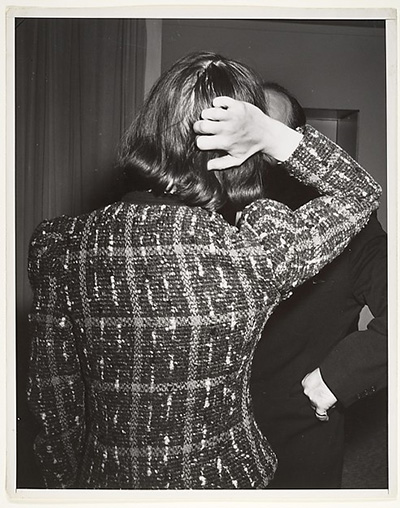
photo { Weegee, Untitled, ca. 1946 }
‘The truth can wait, for it lives a long life.’ –Schopenhauer
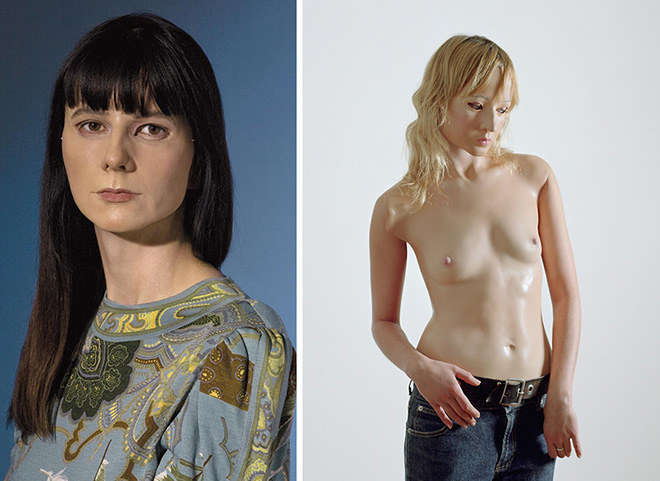
{ Gillian Wearing has redefined portraiture by photographing herself in rubber masks she’s cast from other people’s faces. In this specially created piece, titled Me in ‘My Mask’, she dons a mask of her own face. | Blake Gopnik/Newsweek | Gillian Wearing, Olia, 2003 }
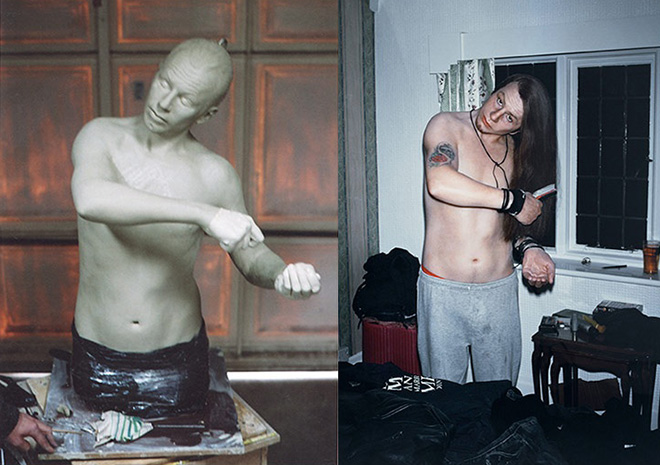
{ Gillian Wearing, Self Portrait as my Brother Richard Wearing, 2003 | The artist leads us through the creative process of making her family series in 2003 – including wrapping her body in a silicone torso for hours }

