nswd

science

Beam me up, beam me up, beam me uptown. Beam me down, beam me down, beam me back downtown.

2212.jpg

UPS managed to save 3 million gallons of gas in 2006 by altering the routes of delivery trucks to avoid left turns. According to them, the company uses software called “package flow” to map out daily routes for drivers.

The problem the UPS driver faces, generally speaking, is that of the “traveling salesman,” in which our hero seeks the shortest possible round trip route given a list of required stops. Arising in road trip planning, school bus pickups, parking meter coin collection, power cable layout, and microchip design, it is not a new problem.

The famous 19th century Irish mathematician Sir William Rowan Hamilton, who at age 12 once defeated the notorious American “calculating boy” Zerah Colburn in an arithmetic-off, invented the “Icosian game,” in which players attempt to find round-trip routes through a twelve-sided figure such that each vertex is visited exactly once and no edge is visited twice.

Inspired by Hamilton’s early work and puzzle-making prowess, mathematicians in Vienna and Cambridge began studying the general form of the traveling salesman problem (TSP for short) in the 1930s.

In 1972, UC Berkeley Professor Richard Karp published perhaps the most famous paper written to date in computer science, called “Reducibility Among Combinatorial Problems.” The point, broadly speaking, is that most problems that appear difficult to solve exactly most likely are. Rather than proving that all kinds of problems have no easy solution, Karp gave a clever method for showing that many different sorts of problems are equivalent in a certain sense: if you provide a magic fast solver for hard problem A, Karp uses it to build a fast solver for hard problem B.

As a result, researchers are amassing an impressive set of hard problems, all reducible to each other, so that if anyone ever found a magic solver for just one of them, well, things would get pretty crazy. A variant of the TSP, that of undirected Hamiltonian Circuits (same Hamilton), was in Karp’s original list of 21 problems. (…)

Computer scientists spend much time devising heuristics — approximate methods for dealing with intractable situations. Here’s a simple heuristic for the traveling salesman: when trying to decide which stop to visit next on the tour, pick the closest remaining one. While in many cases, this rule yields a route much less efficient than the optimal one, it works reasonably well on average.

{ LiveScience, 2008 | Continue reading }

image { Peter Crnokrak }

Down down with a fuzzbox checking out what it could do

43.jpg

Social hierarchies are quite complicated. In the animal world hierarchies are wildly different based on social contexts, species, and environmental factors. For some animals, such as bull elephant seals, hierarchies are unstable—individuals spend a relatively short times at the top of the food chain—and what these alpha males get in terms of mating preferences, they pay dearly for in terms of physical fighting, aggressive confrontation, and threats from other male rivals. In unstable hierarchies, it’s hard to be at the top.

Most hierarchies are much more stable than the example of the bull elephant seal. For instance, in human social life, social hierarchies are typically stable within a specific context. For example, you and your boss aren’t likely to switch roles halfway through the year. And there is good reason for that. If people were allowed to switch willy-nilly between high and low status roles, it would be hard to know who to turn to for advice or guidance, whose directions should be followed, and who should take responsibility for the group’s failures. (…)

Hierarchies, in this case, are an essential way in which people can organize their social lives around others. So in some instances, having some people with low status and some people with high status is good. (…)

There are, of course, some important caveats to this reasoning. (…) A large history of research on socioeconomic status suggests that being low in socioeconomic status is bad for your health. In short, you die sooner when you are lower in socioeconomic status relative to others.

{ Psych Your Mind | Continue reading }

You’ve got the braun, I’ve got the brains

Creative cultural transmission as chaotic sampling

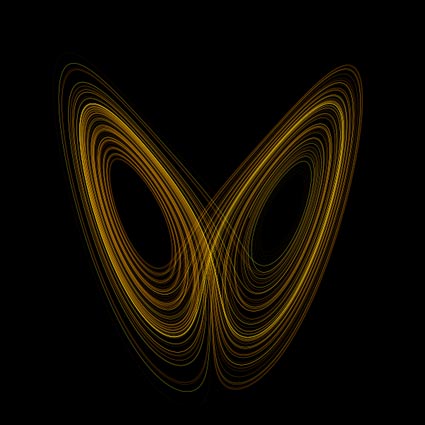
First, Chaos: Some formula produce unpredictable trajectories, for instance the Lorenz attractor. Here’s what part of a trajectory looks like:

425.jpg

You can play with the dynamics using this applet.

The trajectory will not pass through the same point twice, but is not completely random. Lorenz attractors have been used to re-sample sequences in the following way: Imagine you have a sequence of musical notes. Pick a starting point on the Lorenz trajectory and associate each note with successive points. Now you have your notes laid out on the Lorenz attractor so that for any point in the space you can find the closest associated note. If you start on the Lorenz trajectory from a different point, you can sample the notes in a different sequence. This sample will be different from the original, but tends to preserve some of the structure. That is, the Lorenz attractor scrambles the sample, but in a chaotic way, not a random one.

{ Replicated Typo | Continue reading }

related { Gilles Deleuze, Difference and Repetition, 1968 }

Hello. My name is Inigo Montoya. You killed my father. Prepare to die.

2210.jpg

A local zoologist, Jamie Seymour, blamed King’s death on a nearly transparent jellyfish the size of a thumbnail. Covered from the top of its head to the tip of its four tentacles with millions of microscopic spring-loaded harpoons filled with venom, it’s one of at least ten related species of small jellyfish whose sting can plunge victims into what doctors call the Irukandji syndrome.

“The symptoms overwhelm you,” says Seymour, 40, who himself was stung by an irukandji on the lip, the only part of his body uncovered as he scuba-dived looking for specimens near an island off Cairns in late 2003. “On a pain scale of 1 to 10, it rated between 15 and 20,” he says, describing the vomiting, the cramps and the feeling of panic. “I was convinced I was going to die.” But he was lucky; not all species of irukandji administer fatal stings, and he recovered within a day. (…)

Most jellyfish are passive; they drift up and down in the water column, or are pulled to and fro by the tides and winds. They float through the oceans devouring tiny fish and microscopic creatures that bumble into their tentacles, and are no threat to humans.

But those known as box jellyfish, for the shape of their bell, or body, are a breed apart. Also called cubozoans, they’re voracious hunters, able to chase prey by moving forward—as well as up and down—at speeds of up to two knots. They range in size from the various irukandji species to their big brother, the brutish Chironex fleckeri, which has a bell the size of a man’s head and up to 180 yards of tentacles, each lined with billions of cells bursting with deadly venom. Also known as a sea wasp or marine stinger, Chironex, which is far deadlier than irukandji, boasts powerful stingers, or nematocysts, strong enough to pierce the carapace of a crab and quick enough to shoot out at the fastest speed known in the natural world—up to 40,000 times the force of gravity. And unlike other jellyfish, a box jellyfish can see where it’s going and alter its course accordingly; like an eerie creature sprung from science fiction or a horror movie, it has four separate brains and 24 eyes, providing it a 360-degree view of its watery world.

“A Chironex fleckeri can kill a human in one minute flat,” says Seymour, widely considered the world’s foremost box jellyfish researcher. (…)

“We hardly know anything about their lifestyle, how they breed, where they come from, how fast they grow, how long they live, or even how many species there are,” says Lisa-ann Gershwin, a 41-year-old California stockbroker-turned-jellyfish taxonomist. “But they’re like other cubozoans: they’re really neat, like aliens. They split from the other jellyfish, the scyphozoa, more than 300 million years ago, long before dinosaurs walked the earth, and have been making their own way along the evolutionary path ever since.” (…)

Death comes quickly to Chironex victims because—unlike venomous snakes, which inject a glob of venom that must pass through the lymphatic system before draining into the rest of the body—Chironex shoots its venom into the bloodstream, giving the venom a direct pathway to the heart.
In addition to their stinging cells, box jellyfish have another superlative weapon in their hunt for prey: one of the world’s most effective sets of eyes.

On a windy day at a beach 40 miles north of Cairns, I help a team led by Dan Nilsson, a zoology professor at Sweden’s Lund University and a renowned expert on animal eyes. (…) “They swim like fish, not like jellyfish,” he says with a smile. He plucks one from the bucket and shows me what keeps it from bumping into things: four tiny black dots, containing the jellyfish’s 24 eyes, on strands connected to each side of the cube of jelly. Under the microscope, Nilsson has detected in each dot something he calls a sensory club, which is an organ with a set of six eyes, including four that are—much like the eyes of other jellyfish—simply pits, limited to detecting light intensity in various directions. But the two other eyes in each sensory club have more in common with human eyes than the eyes of other jellyfish, with lenses, corneas and retinas. One eye, which points obliquely downward at all times, even has a mobile pupil that opens and closes. The other major eye points upward. “We’re not exactly sure what these eyes are doing,” Nilsson says, although he believes they may help the jellyfish “position itself in the right place where there is plenty of food.” They also help the animal situate the shoreline and the horizon—to avoid being dumped on the beach by a wave—and see obstacles that would tear its delicate tissue, such as a coral reef, a mangrove tree or a pier.

They also have the same stomach—or, rather, stomachs. Because a box jelly, as Jamie Seymour puts it, “charges around the ocean all day hunting mobile prey, prawns and fish,” its metabolic rate is ten times that of a drifting jellyfish. So, to swiftly access the energy it needs, the box jellyfish has developed a unique digestive system, with separate stomachs in each of its tentacles. All box jellies turn their food into a semi-digested broth in the bell, and then feed it down through the tentacles to be absorbed. Since a Chironex can have up to 60 tentacles, each as long as 3 yards, in effect it has up to 180 yards of stomach.

If box jellyfish eyes are a puzzle, its four primitive brains—positioned on each side of its body and attached to it by the same strand that anchors its eyes—are an enigma. Can the four separate brains communicate with each other? If so, do they merge the images they receive from the 24 eyes into one image? And how do they manage if different eyes detect radically different images? Nilsson shrugs. “They’ve evolved a rather advanced system unlike any other animal on earth,” he says. “But we have no idea what’s going on in their four brains, and I suspect it will be a long time before we find out.”

{ Smithsonian | Continue reading }

Despite its primitive structure, the North American comb jellyfish can sneak up on its prey like a high-tech stealth submarine, making it a successful predator. Researchers, including one from the University of Gothenburg, have now been able to show how the jellyfish makes itself hydrodynamically ‘invisible’.

{ PhysOrg | Continue reading }

They give a delightful figure line 11/6 obviating that unsightly broad appearance across the lower back to reduce flesh my belly is a bit too big

41.jpg

{ More than half of the women in a recently published survey reported that near the end of their pregnancies, they took it upon themselves to try to induce labor, mostly by walking, having sex, eating spicy food or stimulating their nipples. | Ohio State University | Continue reading }

photo { Mark Borthwick }

Hello Betsy, it’s Travis. How ya doin’? Listen, uh, I’m, I’m sorry about the, the other night.

461.jpg

The potentially lasting implications of day-to-day couple conflict on physical and mental well-being are revealed in a study published today in the journal Personal Relationships. (…)

The study found that all participants across the sample as a whole experienced sleep disruption after conflict. There was however the greatest degree of sleep disruption amongst individuals who were highly anxious in their relationship. The lowest degree of sleep disruption was found amongst individuals who strongly avoided emotional attachment.

Conflict was also found to have repercussions for next-day mood. However, some participants found their mood negatively affected more than others. Individuals more at ease with emotional attachment found their mood was affected more than did individuals less comfortable being intimate with others.

{ EurekAlert | Continue reading }

‘A living thing seeks above all to discharge its strength–life itself is will to power; self-preservation is only one of the indirect and most frequent results.’ –Nietzsche

77.jpg

Humans and other animals express power through open, expansive postures, and they express powerlessness through closed, contractive postures. But can these postures actually cause power?

The results of this study confirmed our prediction that posing in high-power nonverbal displays (as opposed to low-power nonverbal displays) would cause neuroendocrine and behavioral changes for both male and female participants: High-power posers experienced elevations in testosterone, decreases in cortisol, and increased feelings of power and tolerance for risk; low-power posers exhibited the opposite pattern.

In short, posing in displays of power caused advantaged and adaptive psychological, physiological, and behavioral changes, and these findings suggest that embodiment extends beyond mere thinking and feeling, to physiology and subsequent behavioral choices.

That a person can, by assuming two simple 1-min poses, embody power and instantly become more powerful has real-world, actionable implications.

{ SAGE | Continue reading | More: 10 Simple Postures That Boost Performance }

‘Great architecture has only two natural enemies: water and stupid men.’ –Richard Nickel

446.jpg

…looking at all the ways the conscious is just the littlest bit of what’s happening in the brain. Your brain does these massive computations under the hood all the time. And a hunch essentially is the result of all those computations. So it’s exactly like riding a bicycle, the way you don’t have to be consciously aware, in fact you cannot be consciously aware. Your consciousness has no access to the operations running under the hood that allow you to ride the bicycle, or for that matter that allow you to recognize somebody’s face. you don’t know how you recognize somebody’s face, you just do it effortlessly.

In both of these cases, it’s very hard to write computer programs to do this stuff, to ride a bicycle or recognize somebody’s face, because there’s massive computation going on there that’s required. Your brain does this all effortlessly and the hunch is when it serves up the end result of those computations.

Essentially the conscious mind is like a newspaper headline in the sense that all it ever wants is the summary, it doesn’t need to know all the details of how something happened, it just wants to know.

{ David Eagleman/Wired | Continue reading }
Put a bird on it

555.jpg

Cramer’s company, HyperStealth Biotechnology Corporation… (…)

Over the past 10 years, Cramer, 43, has created more than 8,000 unique camouflage patterns. Ultimately none may have more influence than his most recent design. In April, the United States Army issued a request for proposals for a new family of camouflage patterns to replace the Universal Camouflage Pattern design that’s been the Army’s general-issue print since 2004. Cramer is expected to be among the top contenders for the contract to create a family of patterns and palettes that can function nearly anywhere in the world. (…)

The next half-step breakthrough in concealment might well be something called “adaptive camouflage.” “We’re working on materials that can change their color, shape, and brightness, depending on the surrounding environment.”

{ The Atlantic | Continue reading }

photo { Todd Fisher }

We over here E, shots of, sippin’ on Courvoisier. Yeah rockin’ exclusive.

841.jpg

Happiness can kill, claim scientists, after discovering that people who are too full of joy die younger than their more downbeat peers.

The study by a variety of universities analysed the details of children from the 1920s to old age.

They found people whose school reports rated them “highly cheerful” died younger than their more reserved classmates. This is because they are likely to lead more carefree lives full of danger and unhealthy lifestyle choices, it is believed. (…)

Researchers also discovered that trying too hard to be happy often ended up leaving people feeling more depressed than before. (…)

Results of the study revealed that the key to true happiness was simple: meaningful relationships with friends and family members.

“The strongest predictor of happiness is not money, or external recognition through success or fame. It’s having meaningful social relationships.”

{ The Telegraph | Continue reading }

photo { William Klein }

Sun and flesh (Credo in unam)

3333.jpg

Some unusual solar readings, including fading sunspots and weakening magnetic activity near the poles, could be indications that our sun is preparing to be less active in the coming years.

The results of three separate studies seem to show that even as the current sunspot cycle swells toward the solar maximum, the sun could be heading into a more-dormant period, with activity during the next 11-year sunspot cycle greatly reduced or even eliminated.

{ Space | Continue reading | + video | Read more: Major Drop in Solar Activity Predicted }

artwork { Richard Serra, out-of-round X, 1999 | On view through Aug. 28, 2011, at The Metropolitan Museum of Art, NYC }

‘There is no individual thing in nature, than which there is not another more powerful and strong. Whatsoever thing be given, there is something stronger whereby it can be destroyed.’ –Spinoza

4.jpg

Is Aging a Disease?

One argument against treating aging is that it is not a disease. To an extent, this view stems from the fact that the word aging refers to different things. One is the experience of the passage of time. Another is the acquisition of experience and wisdom that can come from living long. To avoid confusion with these benign aspects, biologists use the term “senescence” for the increasing frailty and risk of disease and death that come with aging. Put more precisely, then, the question at hand is this: Is human senescence a disease?

One approach to defining illness has been to compare a given condition to good health. Is someone’s condition typical of a person of a given gender or age? For instance, the possession of ovaries is healthy for a woman, but not a man. Likewise, one might consider muscle wasting to indicate serious disease in a 20-year-old, but not a 90-year-old. Given that everyone who lives long enough will eventually experience senescence, I can appreciate the view that it is a normal condition and therefore not pathological. Still, from my perspective as someone working on the biological basis of aging, it is hard not to see it as a disease.

Senescence is a process involving dysfunction and deterioration at the molecular, cellular and physiological levels. This endemic malfunction causes diseases of aging. Even if one ages well, escaping the ravages of cancer or type II diabetes, one still dies in the end, and one dies of something. Moreover, in evolutionary terms, aging appears to serve no real purpose, meaning it does not contribute to evolutionary fitness. Why, then, has aging evolved?

The main theory dates back to the 1930s and was developed by J. B. S. Haldane and, later, Peter Medawar—both of University College London—and by the American biologist George C. Williams of the State University of New York, Stony Brook. It argues that aging reflects the decline in the force of natural selection against mutations that exert harmful effects late in life. An inherited mutation causing severe pathology in childhood will reduce the chances of reproduction and so disappear from the population. By contrast, another mutation with similar effects—but which surfaces after a person’s reproductive years—is more likely to persist. Natural selection can even favor mutations that enhance fitness early in life but reduce late-life health. This is because the early-life effects of genes have much stronger effects on fitness. Consequently, populations accumulate mutations that exert harmful effects in late life, and the sum of these effects is aging. Here evolutionary biology delivers a grim message about the human condition: Aging is essentially a multifactor genetic disease. It differs from other genetic diseases only in that we all inherit it. This universality does not mean that aging is not a disease. Instead, it is a special sort of disease.

{ American Scientist | Continue reading }

photo { Noritoshi Hirakawa }

Pacing in front of Rainbow, Earl Scheib, thirty-nine ninety-five merchandise

8761.jpg

We are prejudiced against all kinds of other people, based on superficial physical features: We react negatively to facial disfigurement; we avoid sitting next to people who are obese, or old, or in a wheelchair; we favor familiar folks over folks that are foreign. (…)

It makes immediate sense that people would develop aversions against people who actually have infectious diseases. But why does it also lead to these aversions to perfectly healthy people? Because it’s impossible to directly detect the presence of bacteria and viruses and other microscopic parasites; and so we’re forced to use crude superficial cues. Consequently, we make mistakes. Some of those mistakes lead to the irrational avoidance of things (including people) that pose no infection risk at all.

Here’s an example: Animal feces is loaded with parasites that can make you ill. So if something looks like a pile of dog poop, you probably won’t eat it. That’s smart. But what if I took some delicious chocolate fudge and molded it into the shape of poop? Research by Paul Rozin and his colleagues shows that a lot of people still won’t eat it – even though they know it’s fudge! These people aren’t responding to any rational appraisal of infection risk; they are responding – automatically and aversively – to appearances.

The same principle applies in our interactions with other people.

{ Scientific American | Continue reading }

photo { Nicolas Silberfaden }

It’s whatever you want, the fact is I got more than I flaunt

87.jpg

Why is it that men so often self-destruct? (…) We men just make bad decisions. We can’t help it. We’re men.

Women, on the other hand, do almost everything better. We’ve known this intuitively for a long time. If you didn’t, just ask your wife or your mother. But now there’s a raft of evidence that suggests women are better at everything — including investing.

A new study by Barclays Capital and Ledbury Research found that women were more likely to make money in the market, mostly because they didn’t take as many risks. They bought and held. Women trade this way because they aren’t as confident — or perhaps as overconfident — as men, the study found.

{ MarketWatch | Continue reading }

photo { Katy Grannan }

I’m not that genie in a bottle, I’m in a bag

4441.jpg

Sometimes when I’m lying on my back looking at the sky or the ceiling or some other light-colored background, I swear I can see specks and what looks like little threads floating by. They seem to move when I move my eyes, leading me to believe they’re actually on my eyes. Is there some optical phenomenon that allows us to focus that close? Is there a name for this effect?

{ The Straight Dope | Continue reading }

Floaters are deposits of various size, shape, consistency, refractive index, and motility within the eye’s vitreous humour, which is normally transparent.

Since these objects exist within the eye itself, they are not optical illusions but are entoptic phenomena.

One specific type of floater is either called Muscae volitantes (from the Latin, meaning ‘flying flies’), or mouches volantes (from the French), and consist of small spots. These are present in most people’s eyes and are attributed to minute remnants of embryonic structures in the vitreous humor.

{ Wikipedia | Continue reading }

‘And then to dream of it at night, and to think of nothing except doing this well, as well as I alone can do it.’ –Nietzsche

2121.jpg

Dear Men Who Send Dick Shots to Women,

Women do not want to see your dick. (…)

You know what women masturbate to? The color orange. Or maybe a sunset. Or a nonexistent man in a suit taking her future children to the park. (…)

The secret to seducing a woman is to distract her instincts and convince her you’re not there for sex. You give her a back rub or massage her feet.

{ Gavin McInnes/Taki’s Magazine | Continue reading }

Close relationships, and romantic relationships in particular, are characterized by the small acts of kindness we do for each other. Today you will be doing the dishes, paying for dinner, or taking out the trash, and tomorrow he will be taking you to the airport, putting gas in the car, or buying the groceries. Many of these small acts become so commonplace in relationships that they go unnoticed (how often do you thank your partner for taking out the trash, washing your dishes, or picking up the groceries, especially if it’s become their “job”?). However, when you do notice those small acts, and feel grateful for your partner’s thoughtful behaviors, research shows that both you and your partner benefit.

{ Psych Your Mind | Continue reading }

And it’s out where your memories lie, well the road’s out before me

465.jpg

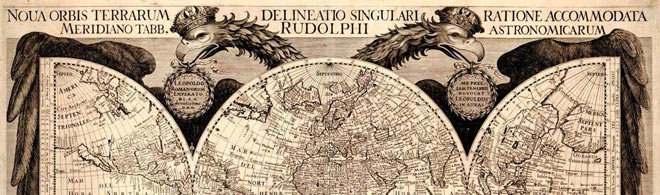
Our house in the western Catskills overlooks the Pepacton Reservoir, a 20-mile ribbon of water between Margaretville and Downsville. Maps on the Internet, depending on their scale and detail, will show you where the reservoir is in relation to nearby towns and roads. What they won’t show you, although every resident of the area knows about them, are the four towns — Arena, Shavertown, Union Grove and Pepacton — that were flooded in the middle ‘50s so that the reservoir could be constructed. (Today, after more than 50 years, resentment against New York City remains strong.) (…)

An apparently empirical project like geography is, and always has been, interpretive through and through. “The map has always been a political agent”(Lize Mogel), has always had a “generative power” (Emily Eliza Scott), and that power can only be released and studied by those who approach their work in the manner of literary critics.

{ NY Times | Continue reading }

related { Some maps contain deliberate errors or distortions, either as propaganda or as a “watermark” helping the copyright owner identify infringement if the error appears in competitors’ maps. The latter often come in the form of nonexistent, misnamed, or misspelled trap streets. | Wikipedia }

If the way which I have pointed out as leading to this result seems exceedingly hard, it may nevertheless be discovered. Needs must it be hard, since it is so seldom found.

2223.jpg

What is a person? What is a human being? What is consciousness? There is a tremendous amount of enthusiasm at the moment about these questions.

They are usually framed as questions about the brain, about how the brain makes consciousness happen, how the brain constitutes who we are, what we are, what we want—our behavior. The thing I find so striking is that, at the present time, we actually can’t give any satisfactory explanations about the nature of human experience in terms of the functioning of the brain.

What explains this is really quite simple. You are not your brain. You have a brain, yes. But you are a living being that is connected to an environment; you are embodied, and dynamically interacting with the world. We can’t explain consciousness in terms of the brain alone because consciousness doesn’t happen in the brain alone.

In many ways, the new thinking about consciousness and the brain is really just the old-fashioned style of traditional philosophical thinking about these questions but presented in a new, neuroscience package. People interested in consciousness have tended to make certain assumptions, take certain things for granted. They take for granted that thinking, feeling, wanting, consciousness in general, is something that happens inside of us. They take for granted that the world, and the rest of our body, matters for consciousness only as a source of causal impingement on what is happening inside of us. Action has no more intimate connection to thought, feeling, consciousness, and experience. They tend to assume that we are fundamentally intellectual—that the thing inside of us which thinks and feels and decides is, in its basic nature, a problem solver, a calculator, a something whose nature is to figure out what there is and what we ought to do in light of what is coming in.

We should reject the idea that the mind is something inside of us that is basically matter of just a calculating machine. There are different reasons to reject this. But one is, simply put: there is nothing inside us that thinks and feels and is conscious. Consciousness is not something that happens in us. It is something we do.

{ Alva Noë/Edge | Continue reading }

photo { William Klein }

Jack was out of cigarettes, we crossed the yellow line

4865.jpg

Affecting up to 80 percent of women, PMS is a familiar scapegoat. But women are affected by their cycles every day of the month. Hormone levels are constantly changing in a woman’s brain and body, changing her outlook, energy and sensitivity along with them.

About 10 days after the onset of menstruation, right before ovulation, women often feel sassier, Brizendine told LiveScience. Unconsciously, they dress sexier as surges in estrogen and testosterone prompt them to look for sexual opportunities during this particularly fertile period.

A week later, there is a rise in progesterone, the hormone that mimics valium, making women “feel like cuddling up with a hot cup of tea and a good book,” Brizendine said. The following week, progesterone withdrawal can make women weepy and easily irritated. “We call it crying over dog commercials crying,” Brizendine said.

For most women, their mood reaches its worst 12-24 hours before their period starts. (…)

Over the course of evolution, women may have been selected for their ability to keep young preverbal humans alive, which involves deducing what an infant or child needs — warmth, food, discipline — without it being directly communicated. This is one explanation for why women consistently score higher than men on tests that require reading nonverbal cues. Women not only better remember the physical appearances of others but also more correctly identify the unspoken messages conveyed in facial expressions, postures and tones of voice, studies show. (…)

Brain-imaging studies over the last 10 years have shown that male and female brains respond differently to pain and fear. And, women’s brains may be the more sensitive of the two. (…)

“A women’s sex drive is much more easily upset than a guy’s,” Brizendine said.

For women to get in the mood, and especially to have an orgasm, certain areas of her brain have to shut off. And any number of things can turn them back on.

A woman may refuse a man’s advances because she is angry, feeling distrustful — or even, because her feet are chilly, studies show.

{ LiveScience | Continue reading }

related { According to research, the more housework men do, the happier their wives are. }

The machines clanked in threefour time. Thump, thump, thurap.

35.jpg

…the Dunning-Kruger Effect — our incompetence masks our ability to recognize our incompetence.  But just how prevalent is this effect? In search of more details, I called David Dunning at his offices at Cornell:

DAVID DUNNING:  Well, my specialty is decision-making. How well do people make the decisions they have to make in life? And I became very interested in judgments about the self, simply because, well, people tend to say things, whether it be in everyday life or in the lab, that just couldn’t possibly be true. And I became fascinated with that. Not just that people said these positive things about themselves, but they really, really believed them. Which led to my observation: if you’re incompetent, you can’t know you’re incompetent.

{ Errol Morris/NY Times | Continue reading }

photo { Roger Ballen }


kerrrocket.svg